Shopping for trim can feel oddly stressful. You stand in the aisle staring at rows of white boards, all slightly different, with little guidance on which one actually suits your Vancouver home.
In this guide, we’ll break down the main types of baseboards that show up in modern Vancouver houses, condos, and townhomes so you can make a confident, budget aware choice.
A modern living room with clean, simple baseboards showing how trim frames a finished space.
TL;DR:
In practice, most modern Vancouver homes use one of six main baseboard styles, even though lumber yards stock dozens of detailed profiles.
- Simple square or eased edge
- Stepped / modern builder baseboard
- Shaker or craftsman
- Colonial / ogee
- Sculpted or multi-piece
- Baseboard with shoe moulding
Once you understand those six profiles, choosing becomes much less overwhelming.
Why baseboards matter in modern Vancouver homes
Baseboards do three jobs at once:
- Cover gaps between flooring and drywall, so your floors look intentional instead of “floating.”
- Protect walls from mops, vacuums, and kids’ toys along the perimeter.
- Set the style of your trim package especially in open plan condos and townhomes where every wall is visible at once.
Around Vancouver, we see a mix of older bungalows with short, detailed trim, 1980s and 90s homes with thinner profiles, and newer builds favouring taller, simpler lines. The right baseboard can make lower ceilings feel a little taller, help a small North Shore condo feel cleaner, and tie together your doors, casings, and flooring.
A small change in baseboard style often does more for a room than a fresh coat of paint alone.
If you’re planning new flooring or repainting, it often makes sense to update baseboards at the same time, or at least have a baseboard installation specialist check the condition of what you already have.
The main baseboard profiles you’ll see in Vancouver
Lumber yards might show you catalogues with 30–40 profiles, but for everyday decisions we usually group modern baseboards into a few easy categories.
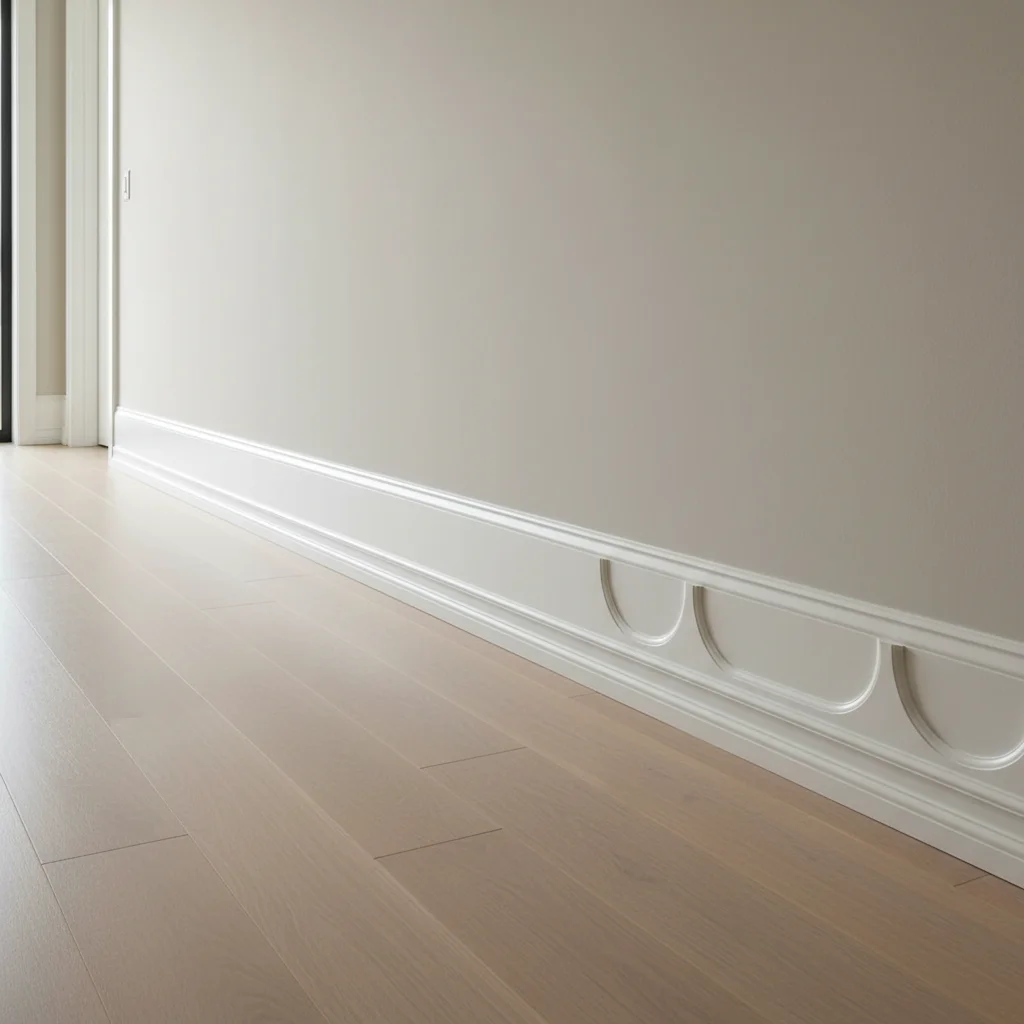
Different types of baseboards, from simple squares to more detailed sculpted profiles, change the feel of a room.
1. Simple square or eased-edge baseboard
This is a flat board with a crisp top, sometimes with the sharp corner slightly rounded. It’s very common in new Vancouver condos and minimalist renovations.
- Best for: Modern spaces, open plan condos, townhomes with clean lines.
- Pros: Easy to clean, pairs well with most door casings, looks current without feeling trendy.
- Watch for: Needs straight walls and careful caulking or any waves in the drywall will show.
2. Stepped / modern builder baseboard
A stepped baseboard has a small curve or “step” near the top edge. You’ll see it constantly in newer spec homes and many strata developments.
- Best for: Standard builder homes, suites, and rentals.
- Pros: Readily available, budget friendly, looks finished without drawing much attention.
- Watch for: Can feel a bit generic in higher end spaces, especially with very tall ceilings.
3. Shaker or craftsman baseboard
Shaker profiles are usually flat with a small bevel or tiny step at the top. They feel solid and slightly traditional, without a lot of curves.
- Best for: Craftsman homes on the North Shore, character houses, and warm, family spaces.
- Pros: Timeless look, works beautifully with shaker doors and simple window trim.
- Watch for: Needs consistent paint work; brush lines can show more on the flat face.
4. Colonial / ogee baseboard
Colonial profiles have flowing curves and grooves along the top. Many 1980s and 90s Vancouver houses were trimmed out this way.
- Best for: Homes where other trim details (door casings, crown) already have curves.
- Pros: Soft, traditional look; can fit heritage style spaces when sized correctly.
- Watch for: Detailed curves collect dust and can date a space if used in small, modern condos.
5. Sculpted or multi piece baseboard
In higher end homes, baseboards might be built from two or three pieces: a flat board plus a separate cap moulding, sometimes even with a small shoe at the floor.
- Best for: Custom homes, formal living spaces, and tall rooms.
- Pros: Lots of design flexibility, can scale up for 10–12 foot ceilings, adds visual weight to a room.
- Watch for: More labour and material; best done by a finished carpenter who can keep profiles consistent.
6. Baseboard with shoe moulding
Technically the “shoe” is an extra trim piece, not the baseboard itself. In real homes, though, they work as a team. A small quarter round or shoe moulding runs along the floor to cover gaps, especially over uneven tile or older floors.
- Best for: Older Vancouver homes with wavy floors, retrofits where new flooring meets old walls.
- Pros: Hides small gaps, gives you a bit more forgiveness during installation.
- Watch for: Add another line at the floor; some homeowners prefer the cleaner look of baseboard only.
If you’d like to see how a new profile would look next to your doors and casings, a handyman can often bring a few offcuts to hold against your walls during an on site visit.
Common baseboard materials in Metro Vancouver
When people ask about baseboards, they’re usually asking about the shape. Material matters just as much, especially in our damp coastal climate.
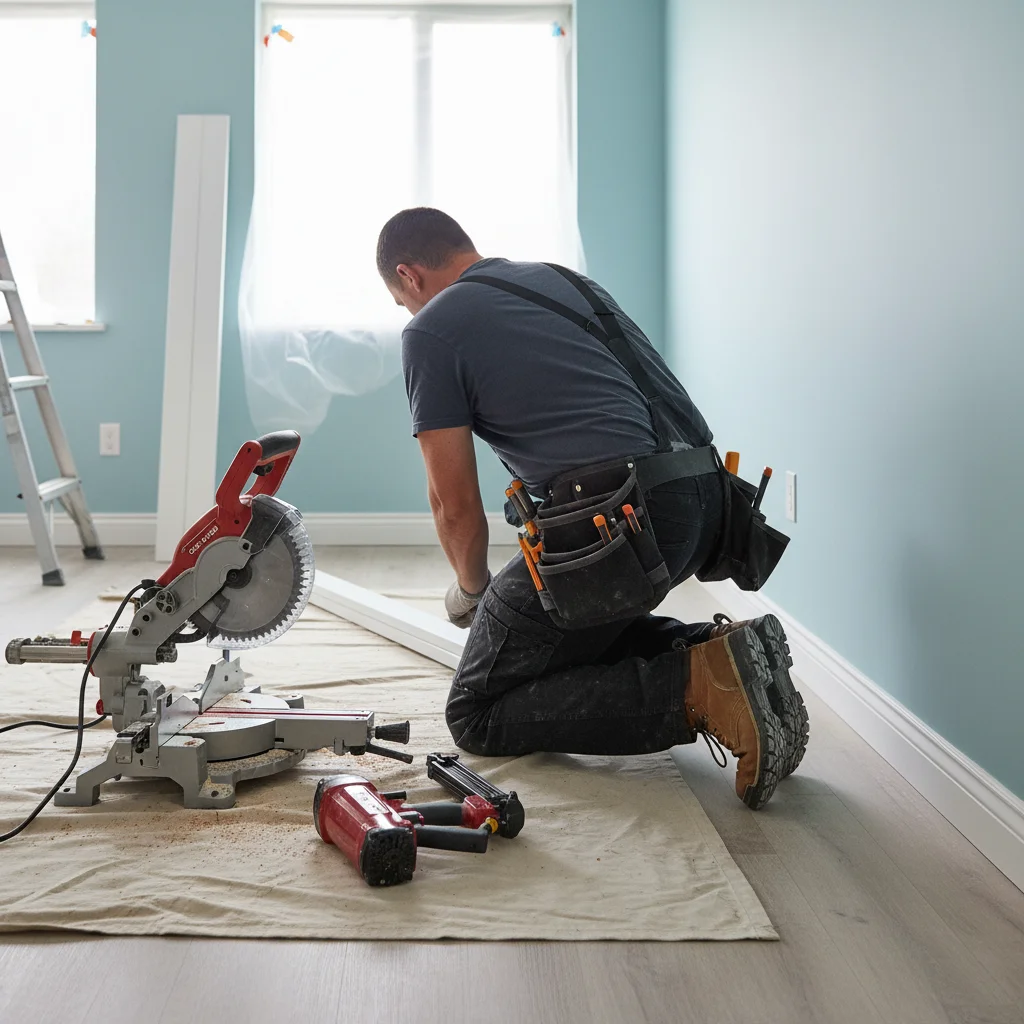
Professional installation helps different baseboard materials perform and look their best over time.
MDF (medium density fibreboard)
MDF is very common in newer homes. It comes pre-primed, takes paint well, and is usually the most budget friendly option.
- Pros: Smooth surface, easy to paint, consistent from piece to piece.
- Cons: Swells badly if it sits in water; not ideal for bathrooms that see frequent splashes or for basements with moisture issues.
Paint grade wood (pine, spruce, fir)
Paint grade softwood is still a workhorse option, especially in older Vancouver houses. You’ll see brands from suppliers like Metrie all over local lumber yards.
- Pros: More resilient to light moisture than MDF, can be sanded and repaired more easily.
- Cons: Knots can telegraph through paint if not sealed properly; boards may have more natural variation.
Stain grade hardwood
In some West Vancouver and custom homes, baseboards are stained to match hardwood flooring or doors.
- Pros: High end look, ties in beautifully with solid wood doors and stairs.
- Cons: Higher material cost, more prep work, and much less forgiving when it comes to nail holes or dents.
PVC and composite trim
PVC and composite products show up more in basements, bathrooms, and some exterior grade trim. They stand up well to splashes and humidity.
- Pros: Moisture resistant, great for bathrooms, entries, or anywhere near wet boots.
- Cons: Can be pricier per foot and sometimes trickier to get a perfect paint finish.
For most modern Vancouver homes, a good quality MDF or paint grade wood baseboard is perfect, with PVC reserved for high moisture areas. If you’re unsure, a quick chat with a local handyman team who works across North and West Vancouver daily can help you choose the right material mix.
How to choose modern types of baseboards for your home
1. Match your home’s style
- Downtown or North Shore condo: Square or eased edge profiles, 3½–4½” tall, keep everything feeling clean and modern.
- Craftsman or character home: Shaker or multi piece profiles in the 4–6″ range usually feel right.
- Luxury custom build: Taller, layered baseboards with a separate cap moulding can match higher ceilings and larger rooms.
2. Respect ceiling height and room size
As a loose rule of thumb:
- 8′ ceilings → 3–5″ baseboard
- 9′ ceilings → 4½–6″ baseboard
- 10’+ ceilings → 5″–7″ (sometimes built up with multiple pieces)
| Ceiling height | Typical baseboard height |
| 8′ | 3″–5″ |
| 9′ | 4½”–6″ |
| 10’+ | 5″–7″ |
That’s not a law, just a starting point from what we see every week on job sites across Metro Vancouver. It also lines up with independent trim guides that report the most common baseboard heights in North American homes are in the 3″–5″ range, with taller profiles used in rooms with higher ceilings.
3. Coordinate with flooring and wall colour
Dark floors with bright white baseboards give a crisp, high contrast look. Light floors with slightly softer white trim feel calmer and more Scandinavian. If your walls are painted a colour, many designers now paint baseboards the same shade, just in a more durable sheen.
4. Think about cleaning and maintenance
Profiles with deep grooves look ornate but grab dust and pet hair. Simpler profiles are much quicker to wipe down. In busy family homes, square, stepped, or shaker styles are usually the easiest long term.
If you’re already repainting, combine decisions: new colour, new profile, and fresh caulking in one go. A handyman who handles both interior painting and touch ups and trim upgrades can coordinate everything so the finished walls and trim feel like one project.
Costs and when to replace vs repaint
In Metro Vancouver, most of the cost is labour, corners, and prep; material and profile height are usually smaller factors.
- Spot fixes: Replace a few damaged boards while other work is underway.
- Refresh only: If the profile still suits your home, sand, repaint, and re-caulk to make older trim look new.
- Full upgrade: Re-trim an entire floor or home when you want a new look or are changing flooring.
Choose a full replacement when trim is badly swollen or rotted, looks dated for the style you want, or when new flooring makes reusing old baseboards look patched in.
For local pricing, book a dedicated baseboard installation quote or request an estimate.
DIY vs hiring a baseboard pro in Vancouver
Straight runs in a simple room are manageable for many DIYers, but corners, doorways, and transitions between different flooring types are where baseboard projects usually get tricky.

A quick consultation with a handyman can clarify which types of baseboards fit your home and budget.
A professional trim carpenter or handyman focuses on:
- Keeping heights and reveals consistent around the room, even on wavy walls.
- Cutting tight mitres and coping inside corners so gaps don’t open up with seasonal humidity changes.
- Detailing joints where baseboards meet tile, carpet, and hardwood so caulk lines stay neat.
Many homeowners let a pro handle cutting, fitting, and caulking, then do the painting themselves. For broader moisture and maintenance questions, organisations like CMHC publish checklists that pair well with a yearly trim and caulking check.
FAQs
What’s the most popular baseboard for modern Vancouver condos?
Right now, simple square or eased edge baseboards in the 3½–4½” range win out in most condos we visit. They suit flat panel doors and the clean lines common in newer strata buildings.
Which baseboards work best in bathrooms and entries?
Moisture is the main concern. Painted wood or PVC usually performs better than MDF near standing water, and simpler profiles with minimal grooves are easier to wipe dry in high traffic areas.
Can I mix baseboard styles in the same home?
You can, but it needs a plan. Keep one profile through main spaces and reserve small variations for areas like basement suites or utility rooms so transitions still feel intentional.
Do baseboards have to match door and window trim?
They don’t have to match exactly, but they should feel related. In most modern trim packages the baseboard is slightly taller than the door casing, and the shapes share similar lines flat with flat, curvy with curvy.