If you own a house in Metro Vancouver, your exterior takes a beating from rain, salt air, and winter freeze thaw cycles. This guide compares wood vs vinyl siding for Vancouver homes cost, upkeep, and when smart repairs can delay or replace the need for a full residing.
TL;DR
- On a budget and hate repainting? Quality vinyl siding is usually cheaper up front and needs far less routine maintenance than wood.
- Care most about West Coast characters? Wood siding (especially cedar) still wins for natural look and heritage homes, but it needs regular stain/paint and careful detailing to resist rot.
- Already have decent siding? In many local homes, targeted repairs, new trim, and fresh paint from exterior carpentry services are enough. Full residing isn’t always necessary.
Wood vs vinyl siding at a glance
Here’s a side by side comparison based on typical cedar or other wood lap siding versus standard residential vinyl siding you see all over Greater Vancouver.
| Factor | Wood siding | Vinyl siding |
| Upfront cost (materials) | Usually higher, especially cedar | Usually lower per sq. ft., especially basic profiles |
| Maintenance | Regular painting/staining, caulking, rot repair | Occasional washing; spot repairs if cracked or loose |
| Typical lifespan* | 30–50+ years with good upkeep | 25–40+ years, depending on quality and installation |
| Moisture risk | Can rot if details fail or finish is neglected | Doesn’t rot, but can trap moisture behind if poorly detailed |
| Look & feel | Warm, natural grain; suits West Coast and heritage homes | Clean, consistent; higher-end vinyl can mimic wood reasonably well |
| Repairs | Individual boards can be patched or replaced | Damaged courses or panels can be swapped, but colour matching can be tricky |
Lifespan assumes proper rain screen detailing and regular maintenance. Actual results depend heavily on installation quality and exposure.
What Vancouver’s climate does to your siding
Greater Vancouver is light on snow but tough on siding. Long wet seasons, wind driven rain, and coastal humidity push moisture into every small weakness in your exterior.
- Wood siding swells and shrinks with moisture. If paint or stain fails, water gets into end grain and fastener holes and rot starts behind the boards.
- Vinyl siding itself doesn’t absorb water, but it expands and contracts with temperature, so it must be hung “loose.” If flashing, house wrap, or rain screen gaps are missing, water can still sneak behind and damage the sheathing.
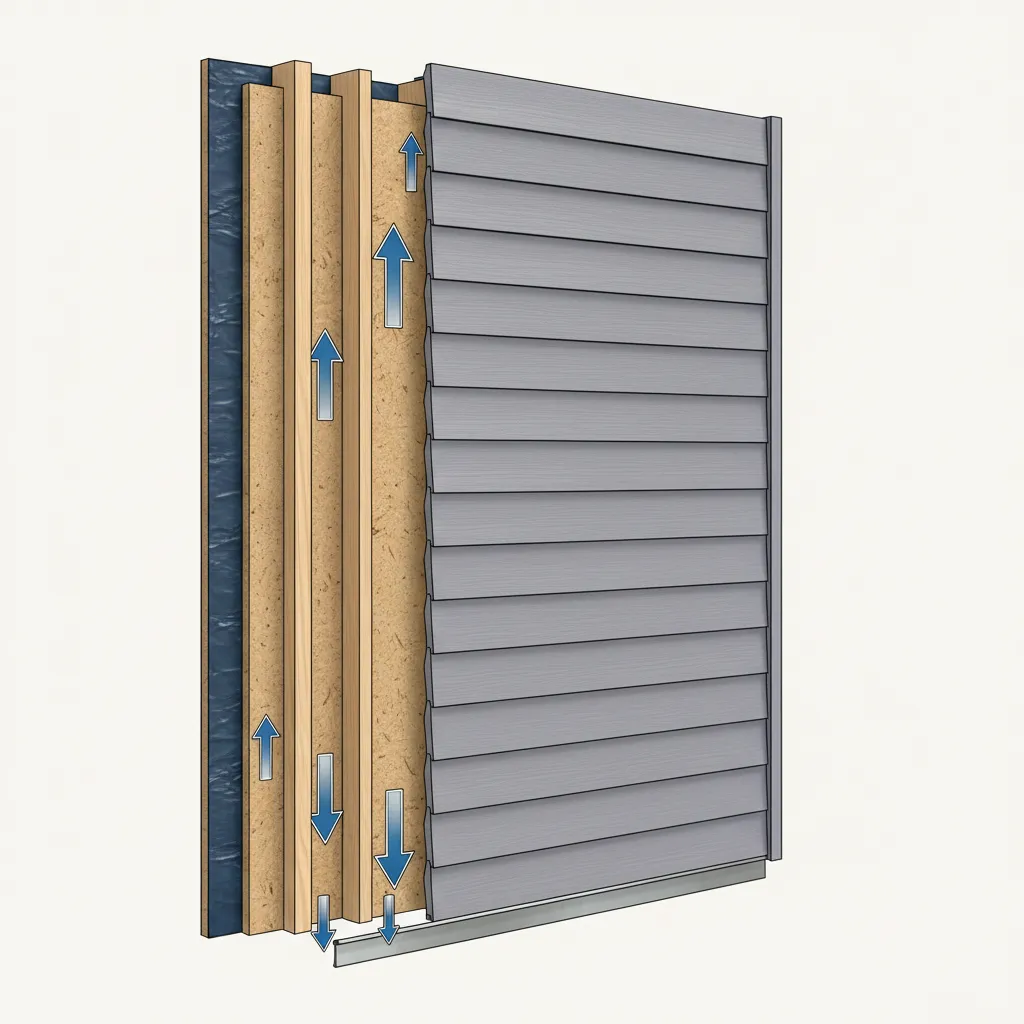
A simplified rainscreen wall detail showing how siding, an air gap, and a weather barrier work together to manage moisture.
That’s why our seasonal Vancouver home maintenance checklist includes a yearly walk around the exterior: looking for peeling finish, soft spots, and loose or buckled courses before small issues become big leaks. For a deeper dive into B.C. rain screen walls and cladding maintenance, BC Housing’s “Maintenance Matters: Cladding” bulletin explains the main rainwater control strategies and their upkeep.
Pros and cons of wood siding in Vancouver
Pros of wood siding
- Classic West Coast look. Cedar, fir, or other wood siding fits well with local trees, older character homes, and many strata design guidelines.
- Easy to change colours. Sand, patch, prime, and repaint. You can refresh the look without changing the material.
- Repairable in small sections. If a few boards along a deck or at a leaking gutter are rotten, a carpenter can cut out and splice in new pieces, then tie everything together with paint.
- Natural, renewable material. For homeowners who care about renewable resources and lower embodied energy, wood is still a strong option.
Cons of wood siding (especially in a rainy climate)
- Ongoing maintenance. Expect to re-coat paint every 7–10 years in many Vancouver exposures, sometimes sooner on sunny south and west walls.
- Rot risk at details. We see rot most often at window trims, belly bands, bottom courses near decks, and where siding runs too close to soil or concrete.
- Higher labour costs. Both installation and repairs usually take more hands on carpentry time than vinyl.
- Sensitive to bad detailing. Missing flashings, no rain screen gap, or caulking in the wrong places can trap water and shorten the life of even high-quality cedar.
On many Vancouver homes, the wood itself isn’t the main problem; it’s the flashing, caulking, and prep around it.
A lot of our exterior work is small but important: replacing a rotten bottom course, adding kick out flashing, then prepping and painting. You can see examples in our wood rot repair projects across the North Shore.
Pros and cons of vinyl siding for local homes
Vinyl siding is a plastic cladding (made mostly from PVC) that clips together and hangs from the wall. It’s popular because it’s relatively light, fast to install, and doesn’t need paint.
Pros of vinyl siding
- Low routine upkeep. No staining or scraping; most of the time you’re just rinsing off algae and city grime with a garden hose.
- Good value per square foot. Basic vinyl profiles usually cost less up front than cedar or other wood siding, and installer labour is often lower too.
- Resistant to rot and insects. The material itself doesn’t rot, and carpenter ants aren’t interested in chewing it.
- Consistent appearance. Colour runs through the material, so there’s no peeling paint. Higher end vinyl can mimic the shadow lines of wood reasonably well.
Cons of vinyl siding in Vancouver’s conditions
- Can crack or warp. Impacts (hockey pucks, rocks from lawnmowers) and UV exposure over time can crack or fade lower grade products.
- Moisture still matters. If the rain screen gap, flashings, and house wrap behind the vinyl are poorly detailed, trapped water can quietly rot your sheathing.
- Heat issues near BBQs and windows. Vinyl can distort from strong reflected sunlight or BBQ heat, so clearances and placement matter.
- Repairs need a bit of know-how. Swapping in new courses takes the right tools and technique, especially on older profiles that are no longer stocked.
For an inspector’s perspective on common vinyl issues, the InterNACHI vinyl siding overview is a worthwhile read.
Most of the vinyl siding work we take on is replacing damaged runs, refasting loose pieces, adding missing trims, and closing water entry points not full house records.
Cost, lifespan & maintenance: vinyl siding vs wood siding
Upfront costs
Exact numbers jump around with lumber markets and supply chain, but as a rule:
- Vinyl vs wood siding: basic vinyl is usually the cheaper option per square foot, especially compared with cedar or other premium wood species.
- Higher end vinyl vs painted wood: once you move into thicker, insulated, or more detailed vinyl profiles, the gap narrows.
- Install labour: full wood siding jobs often cost more in labour than vinyl reclads because of cutting, flashing details, and heavier materials.
Ongoing maintenance and lifespan
- Wood siding: expect regular washing, spot caulking, and a full paint or stain cycle every decade or so. With that level of care, 30–50+ years of service is common.
- Vinyl siding: clean occasionally; repair cracked or loose pieces as needed. Many products offer long warranties, but physical damage and poor detailing can shorten real world life.
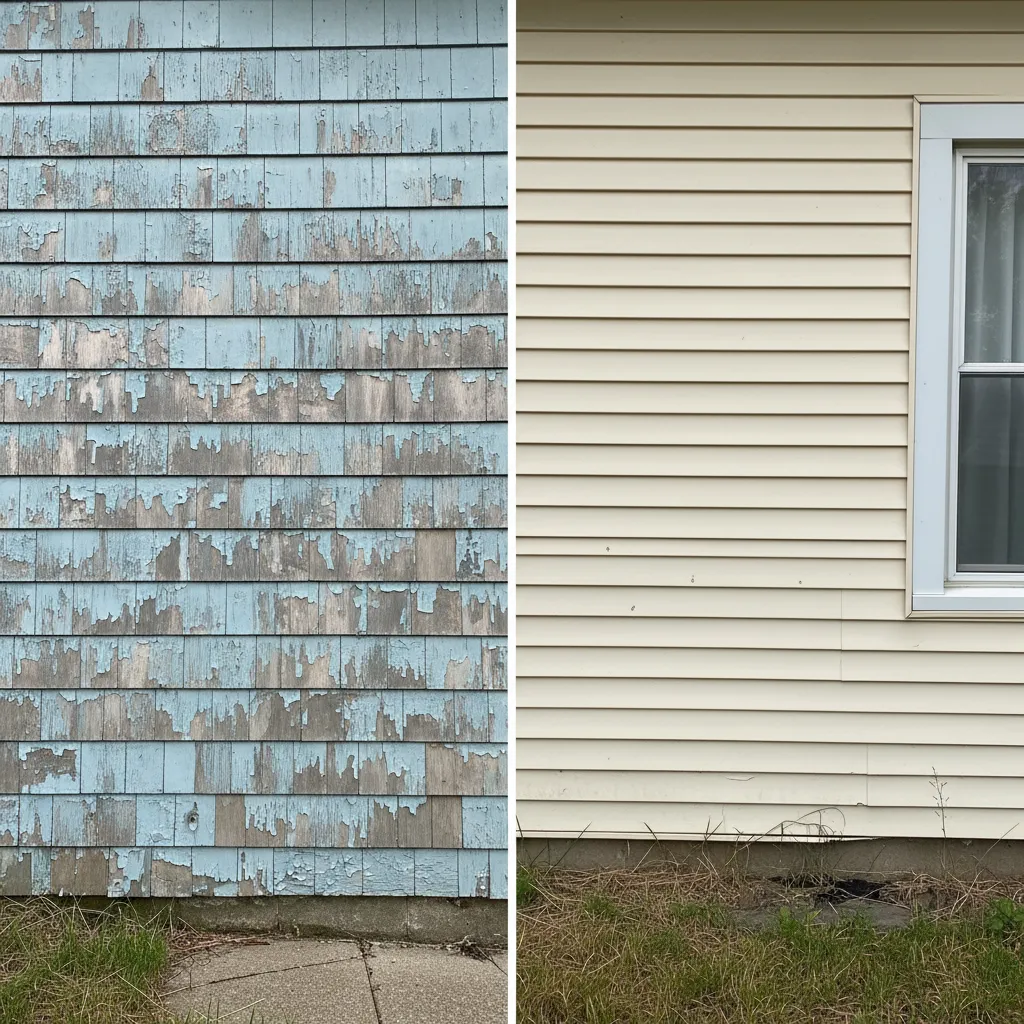
Typical wear: peeling paint on older wood siding compared with cracks and warping on aged vinyl siding.
For more detail on long term performance and upkeep, the Vinyl Siding Institute’s homeowner fact sheet outlines how certified vinyl siding is designed for low maintenance cleaning instead of repeated painting and caulking.
For specific pricing on small fixes, our home repair and replacement services page outlines the kinds of siding, trim, and rot repairs we handle every week.
Curb appeal, strata rules & home value
In many Metro Vancouver neighbourhoods, design guidelines favour wood or “wood look” exteriors, and lots of 1970s–1990s homes already have cedar or bevelled wood siding that suits the street.
- Wood siding usually looks best on character homes, cabins, and higher end properties where texture and depth matter.
- Vinyl siding often works well on simpler façades, rear elevations, and rentals where low upkeep is the main goal.
Buyers tend to notice whether the exterior looks cared for more than the exact material: crisp caulking, solid trims, no soft spots, and paint that isn’t peeling. Those are all things a good small project handyman can tidy up without a massive renovation.
Repair vs replace: what we actually see on local homes
We spend more days fixing siding than ripping everything off and starting from scratch, so we have a clear sense of when targeted repairs are enough and when full replacement is worth it.
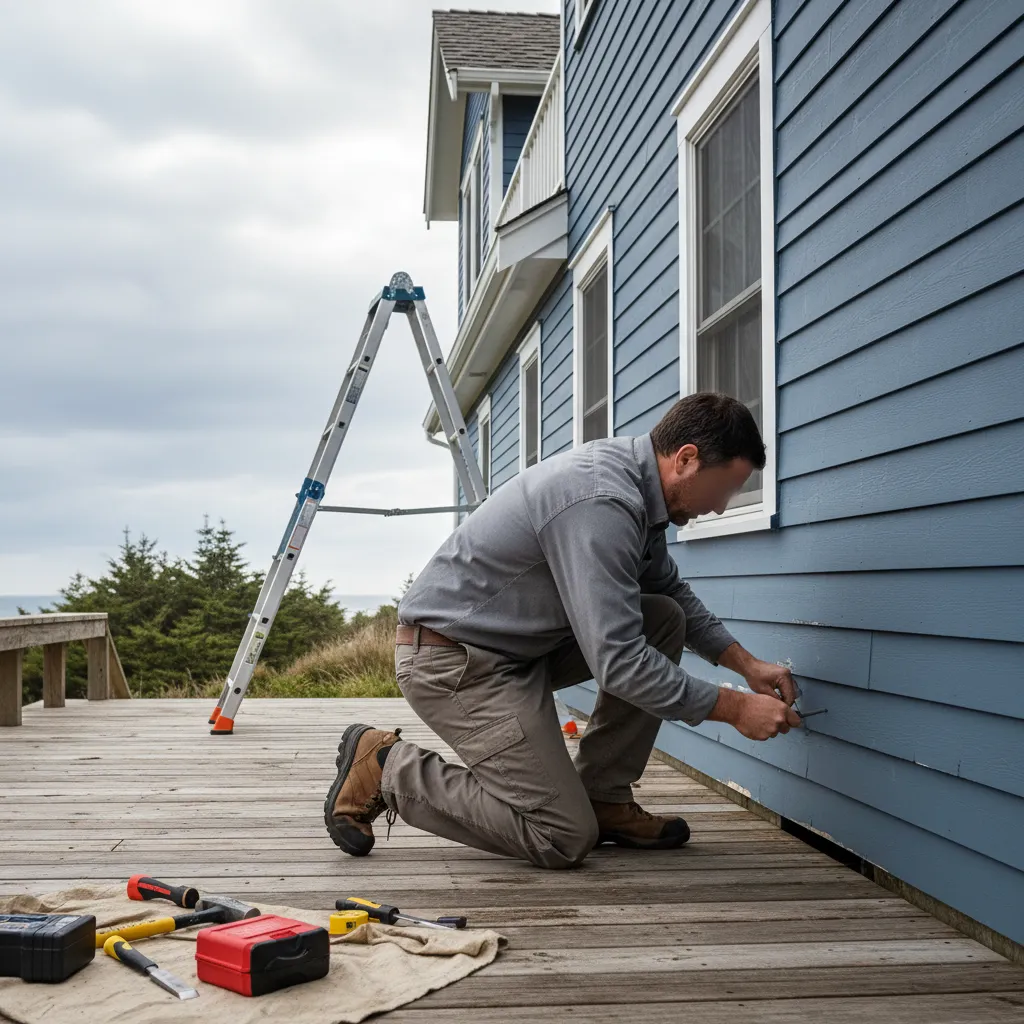
A handyman inspecting the lower courses of siding near a deck to decide whether repair or full replacement is needed.
When repairs are usually enough
- Localized rot at one corner, deck connection, around a leaking window, or on rotted wood stairs
- A few cracked vinyl courses from impacts or old satellite dish holes
- Trim that has failed while most of the field siding is still solid
- Minor waves or gaps that can be corrected with fastening and proper flashings
On many older cedar sided homes, we find that only the bottom courses and some window trims are rotten. Replacing those baseboards, adding proper flashings, and repainting often preserves the original look and avoids the cost of a full siding repair.
Case study: repair instead of full siding
On a cedar sided home, the owners were quoted for a full clad after seeing peeling paint and soft spots near a deck. Our inspection found rot limited to the lowest siding courses and a few trim boards. By replacing those pieces, adding kick out flashing, and repainting, we eliminated the leak risk at roughly a third of the cost of full replacement.
When a full siding job is worth considering
- Widespread rot or carpenter ant damage across multiple elevations
- Serious building envelope issues (no rain screen, repeated leaks, mould inside walls)
- Multiple past patches in both wood and vinyl that look mismatched and dated
- Major renovation plans where upgrading insulation and windows at the same time makes sense
In those cases, we’ll often handle the preparatory carpentry and rot repair, then coordinate with or recommend a dedicated siding contractor for the full clad.
So which is better for your Vancouver home?
There isn’t a single right answer, but you can narrow it down quickly by asking a few questions.
Choose wood siding if:
- You want a classic West Coast or heritage look
- You’re comfortable budgeting for regular painting or staining
- Your strata or neighbourhood guidelines favour natural materials
- You’re already planning envelope upgrades and can detail the wood properly
Choose vinyl siding if:
- You want the lowest ongoing maintenance possible
- You’re working within a tighter budget
- Your home’s style suits simple vinyl profiles
- You care more about function and durability than traditional character
Not sure which way to go? Start with an honest condition check: fix soft spots, upgrade flashings, tidy caulking, and repaint. That alone can often buy you another decade before you need to make a big vinyl vs wood decision. If you’d like a practical set of eyes on your exterior, Microworks Handyman specializes in small to mid sized siding repairs and trim work you can Get an Estimate with a few photos and a short description.
FAQs
How long does wood siding last in Vancouver?
With proper rain screen detailing, good flashing, and regular paint or stain cycles, wood siding in Vancouver can often last 30–50+ years. Most failures we see come from neglected caulking, missing flashings, or boards run too close to decks and soil.
Is vinyl siding better than wood siding for rainy Vancouver weather?
Vinyl handles moisture well as a material, but the wall behind it still needs to dry. Good installation, rain screen detailing, and flashing matter just as much as the product. In very wet exposures, vinyl with proper detailing can be easier to live with than wood that isn’t maintained.
Does vinyl siding add insulation?
Standard vinyl siding adds very little insulation value by itself. Some “insulated vinyl” products include a foam backing to improve R value and make the profile stiffer, but most of your thermal performance still comes from what’s behind the cladding.
Is this article professional engineering or code advice?
No. This guide is general information based on building science best practices and our experience working on homes across Metro Vancouver. Building codes, manufacturer requirements, and site conditions vary, so confirm details with your local building department or a qualified siding contractor before major work.