Owning a log cabin in British Columbia is a bit like owning a classic wooden boat: beautiful, warm, and absolutely dependent on steady care. This log home maintenance guide is written for folks with cabins on the North Shore, in Sea to Sky country, and across Metro Vancouver who want their place to last for decades, not just look good for a few summers. We’ll walk through realistic cost ranges, a simple yearly checklist, and the early warning signs that tell you it’s time to call in a pro instead of just grabbing a brush and hoping for the best.
Contents
- TL;DR:
- Why Log Homes Need Different Care Than Conventional Houses
- Log Home Maintenance Checklist (By Season)
- Log Home Maintenance Cost: What to Budget
- What to Watch For: Early Warning Signs of Trouble
- DIY vs Hiring a Pro in Metro Vancouver
- Log Home Maintenance and Supply: Picking Products That Work
- How Microworks Handyman Helps Log Home Owners
- FAQs
TL;DR:
- Plan roughly $800–$2,000 per year for routine log home maintenance on a small to mid sized BC cabin, plus larger restaining projects every few years.
- Do a thorough exterior check once a year, wash and touch up stains every 1–2 years, and expect full restaining on exposed walls roughly every 4–7 years, depending on sun and weather.
- Early red flags include soft or dark spots at log ends, grey bare wood on sunny sides, gaps in caulking, and carpenter ants or fine sawdust-like frass.
- DIY washing, basic inspections, and low height touch ups are fine; call a log savvy carpenter for rot, movement, leaks, insect damage, or anything that needs cutting into the structure.
Why Log Homes Need Different Care Than Conventional Houses
With a standard framed house, most of the structure hides behind siding and drywall. Log homes put everything out in the open. Every driving rain, UV heavy summer, and freeze thaw cycle hits the actual structure of your home.
In our wet coastal climate (North Vancouver, West Vancouver, Bowen Island, etc.), three forces do the most damage:
- Water soaking into checks (cracks) and end grain.
- Sun breaking down stains and greying bare wood.
- Movement as the logs shrink, swell, and settle over time.
Good maintenance is about staying just one step ahead of those three. The payoff is huge: a solid, tight cabin instead of rot, carpenter ants, and drafts that never seem to go away.
If you want a general home checklist as well, you might like our broader home maintenance checklist.
Log Home Maintenance Checklist (By Season)
Here’s a simple, practical checklist you can run through every year. Think of it like a dental cleaning for your cabin.
Spring (after the worst of the rain)
- Walk the full exterior at ground level and from a distance.
- Look for dark patches, soft spots, or grey bare wood on sunny sides.
- Check chinking/caulking for gaps, peeling, or separation from the logs.
- Inspect window and door trims for open joints or cracked caulking.
- Clear vegetation and soil away from lower courses of logs.
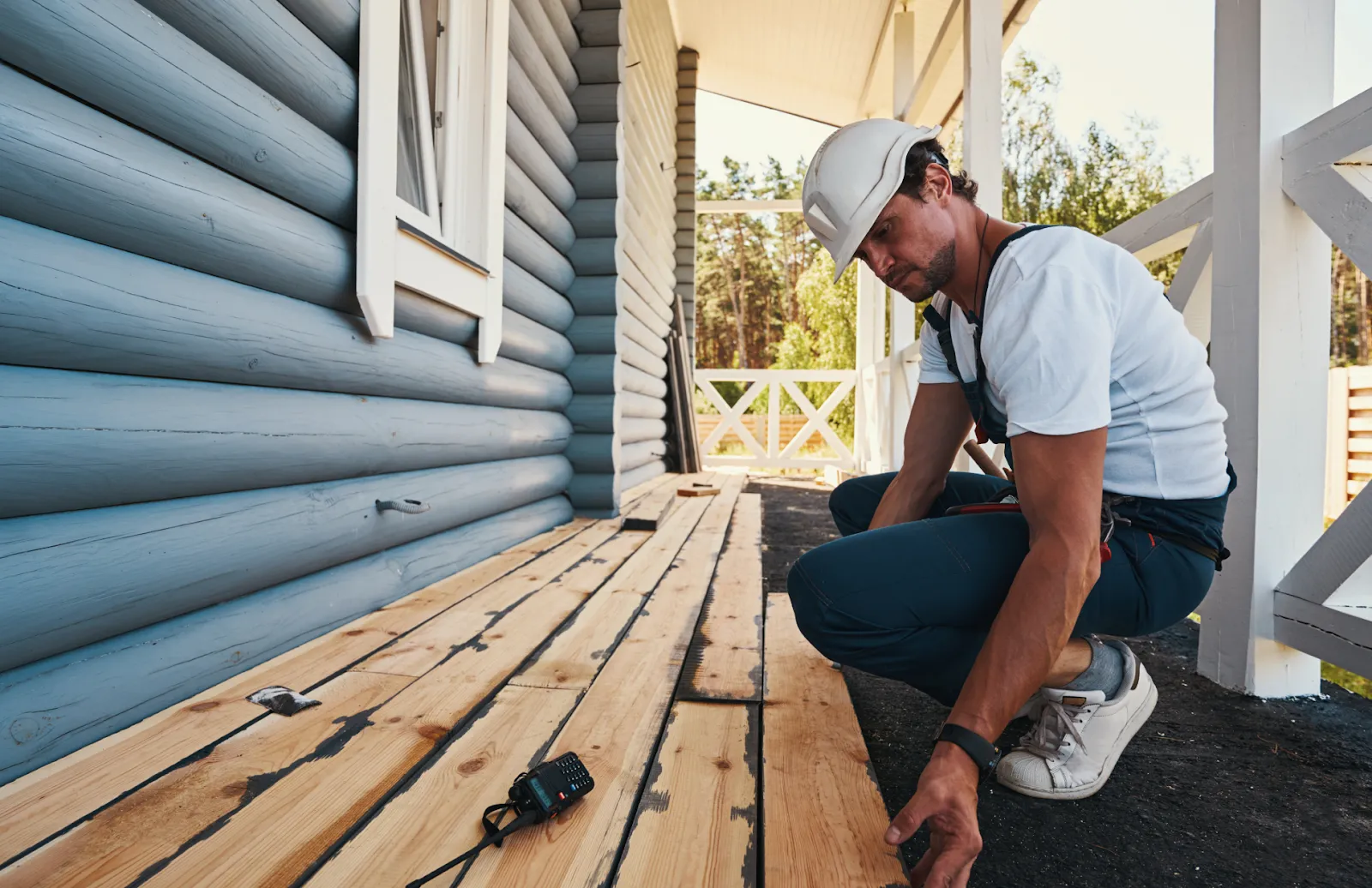
- Check decks, stairs, and railings tied into the log structure.
Late Summer / Early Fall
- Recheck south and west facing walls for faded or chalky stains.
- Spot treat any bare patches with compatible exterior log stains.
- Top up caulking around windows, doors, and log to log gaps as needed.
- Clean gutters and downspouts; make sure water discharges well away from the house.
- Trim back branches that keep walls damp or rub against the logs.
Every 2–3 Years
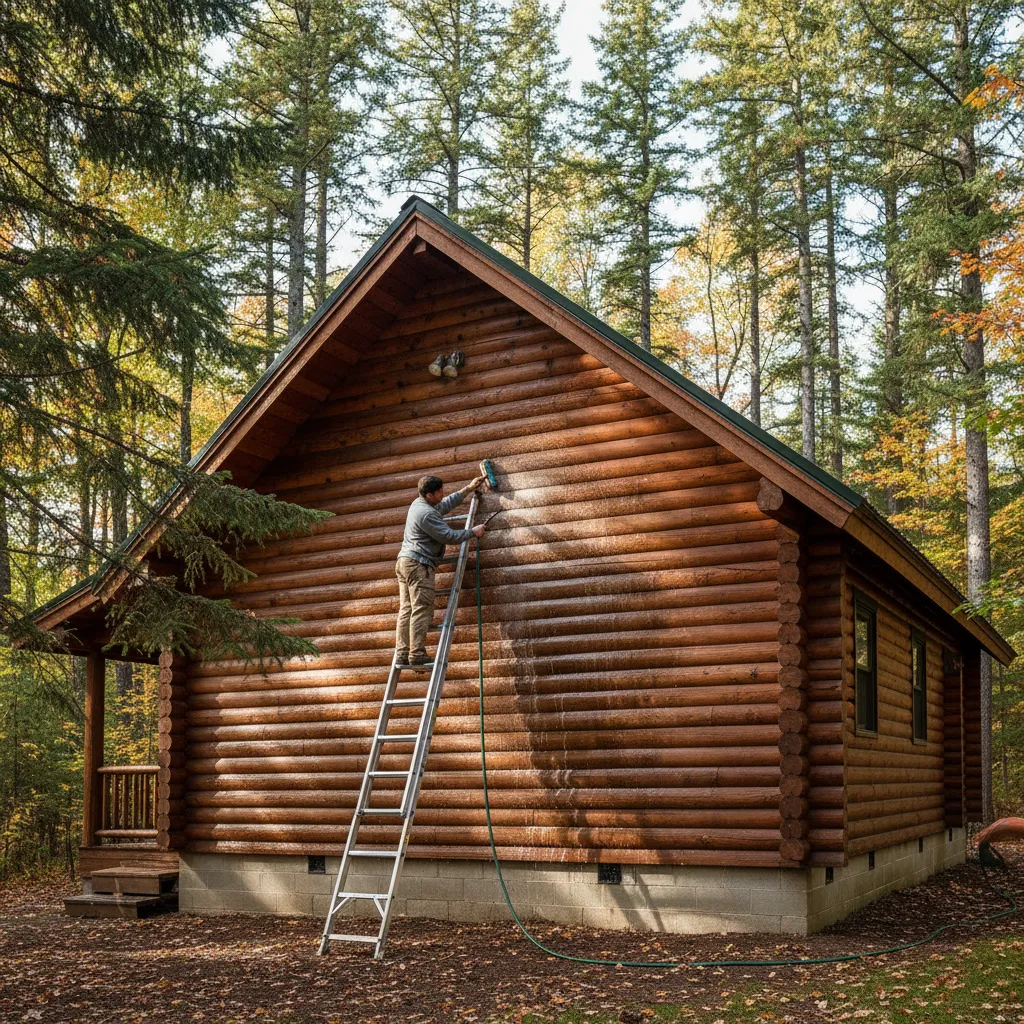
- Wash the exterior with a log friendly cleaner (not a high pressure blast).
- Inspect for hairline checks facing up that collect water and seal key ones.
- Have a pro inspect suspicious soft spots for early rot.
- Review the overall stain system and plan the next full recoat.
After Major Storms
- Check for wind driven rain penetration around windows and doors.
- Look at exposed log ends for new cracks or darkening.
- Confirm gutters, downspouts, and ground drainage are still doing their job.
Not every task here needs a contractor. Many homeowners in North Vancouver like to handle washing and light touch ups themselves, then bring in our team for wood rot repairs, tricky caulking, and higher ladder work.
Log Home Maintenance Cost: What to Budget
Costs swing a lot based on size, height, access, and how long it’s been since the last proper maintenance. Still, some ballpark ranges help with planning.

| Task | Typical Frequency | Who Often Does It | Ballpark Cost (small–mid BC cabin) |
| Basic exterior wash & inspection | Every 1–2 years | Homeowner or pro | $300–$900+ |
| Spot stain touch-ups | As needed | Homeowner or pro | $250–$1,200+ (depends on areas) |
| Full re-stain / re-finish | Every 4–7 years (exposure-dependent) | Pro | Several thousand dollars and up |
| Minor rot repair (small areas) | As needed | Pro | $350–$2,000+ per repair area |
| Chinking / caulking repairs | Every few years | Pro or handy homeowner | $400–$1,500+ depending on scope |
As a rule of thumb, steady maintenance is far cheaper than full restoration. One log home specialist in Colorado notes in their Log Home Finishing’s maintenance guide that investing around US$1,500 per year in inspections and touch-ups can help avoid US$25,000 or more in major restoration work later. A European manufacturer’s log cabin maintenance cost overview points to similar annual budgets (£800–£1,500) and warns that neglecting even basic work often leads to far more expensive structural repairs. We see that pattern locally too: on a recent North Shore project, a half day repair at a stair to log connection cost a fraction of what a full log replacement would have run a few seasons later.
For log specific guidance, the Log Homes Council shares general best practices on how often to refinish and inspect your logs, based on exposure and finish type.
Microworks Handyman focuses on small to mid sized projects: things like localized rot repair, trim replacement, and sealing problem areas. Large “full house” stripping and refinishing is better suited to a specialty log home finishing crew, but our team is often the one to flag issues early during a maintenance and repairs visit.
What to Watch For: Early Warning Signs of Trouble
Catching problems early is the single best way to keep costs down. Here are the key red flags we look for when we visit a log home.
1. Soft or Dark Spots in the Logs
- Wood that feels spongy when you press with a screwdriver.
- Dark, wet looking patches that stay damp long after the rain stops.
- Crumbly, punky wood near deck connections or window sills.
2. Gaps and Drafts
- Visible gaps in chinking or caulking where logs meet.
- Cold drafts in winter near specific walls, outlets, or baseboards.
- Light shining through between logs in the loft or crawlspace.
3. Insects and Critters
- Carpenter ants, wood-boring beetles, or piles of fine sawdust like frass.
- Birds pecking at soft spots in the logs.
4. Movement or Distortion
- Doors or windows suddenly sticking or going out of square.
- Cracked interior drywall near corners or openings.
- Log ends that look twisted or out of alignment.
In BC, resources like BC Housing’s homeowner guides also stress how crucial moisture management is for wood structures.
DIY vs Hiring a Pro in Metro Vancouver
A lot of cabin owners enjoy rolling up their sleeves, and there’s plenty you can do yourself. The key is knowing when a ladder and a caulking gun are enough, and when you should call for backup.
Good DIY Tasks
- Gentle washing of the exterior with a log safe cleaner.
- Visual inspections and basic note taking (“south wall faded, deck post soft,” etc.).
- Light sanding and stain touch ups on reachable areas.
- Clearing vegetation and improving drainage around the cabin.
Best Left to a Pro
- Working at height (upper storeys, steep sites, over sloped ground).
- Rot repairs that involve structural or near structural elements.
- Rebuilding trims, sills, and log ends with proper joinery.
- Diagnosing ongoing moisture ingress or insect damage.
Our team regularly helps clients in North Vancouver, West Vancouver, and Burnaby with precisely these “in-between” jobs too involved for a quick DIY patch, but not a full renovation. You can see the range of work we take on in our handyman services overview.
Log Home Maintenance and Supply: Picking Products That Work
Walking into a paint store can feel like standing in front of a wall of nearly identical cans. For log homes, a few product categories matter more than brand logos:
- Exterior log stains and clear coats – typically breathable, UV resistant, and designed for round or D-profile logs.
- Chinking and specialty caulks – flexible sealants that stretch as the logs move.
- Borate treatments – used in some systems to help protect against insects and decay.
- Cleaners and brighteners – formulated to clean without chewing up the wood fibres.
We recommend:
- Sticking with products specifically labelled for log or heavy timber construction.
- Following the manufacturer’s spread rates, prep steps, and cure times closely.
Store leftover stain and caulking in a cool, dry place, label cans with the colour and where you used them, and jot a quick note on what you applied where your future self (and any contractor) will thank you when it’s time to match finishes or plan the next recoat.
If you’re unsure what to choose, we’re happy to discuss options during a site visit especially if we’re already there handling small painting and staining on decks, trims, or siding.
For deeper background, the building scientists at Building Science Corporation have excellent general resources on how water moves through wood structures.
How Microworks Handyman Helps Log Home Owners
Microworks is built for exactly the kind of small and mid sized tasks that keep log homes solid year after year. We’re not the big crew that brings scaffolding for a full refinish. We’re the team you call when:
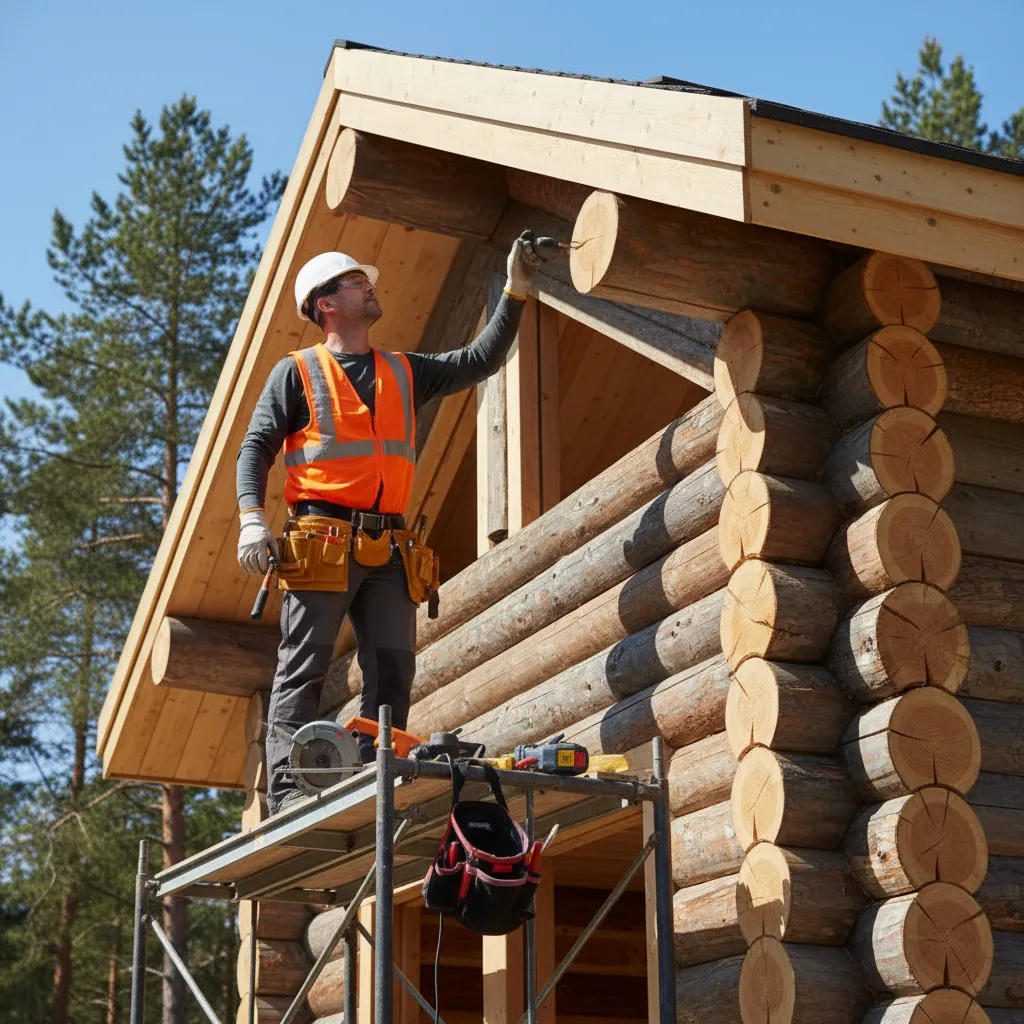
Some log home maintenance tasks are best handled by an experienced carpenter.
- A deck post or stair stringer tied into your logs has started to rot.
- You need trims or sills rebuilt in real wood, not just patched with filler.
- There are persistent leaks or drafts around a few windows or doors.
- You want an experienced set of eyes to walk the exterior and flag issues early.
We serve North Vancouver, West Vancouver, Vancouver, Burnaby, Coquitlam, Bowen Island, and nearby communities. If you’re not sure whether your project is “too small” for a contractor, it’s probably exactly what we do.
Get an Estimate for log related repairs, rot fixes, and exterior touch ups, and we’ll let you know what makes sense to tackle now versus monitor over time.
FAQs
How often does a log home need maintenance?
Most log homes need washing and touch-ups every 1–2 years and full restaining on exposed walls about every 4–7 years, depending on exposure; a quick annual exterior check helps catch issues early.
What is the biggest log home maintenance cost over time?
Periodic refinishing (washing, prep, and restaining) is usually the single largest recurring expense. After that, the big ticket items tend to be structural rot repairs that went undetected for years, especially at deck connections and log ends.
Can Microworks Handyman supply materials as well as labour?
For many log home repair and maintenance jobs, we can supply common materials (stains, caulks, fasteners, and lumber) as part of the work. If you already have specific products on site, we’ll confirm they’re appropriate before using them.
Is my log home in North Vancouver too old to rescue?
Not necessarily. Many older log cabins in our climate can gain years of extra life from targeted repairs cutting out bad sections, rebuilding trims, and redirecting water. A quick site visit is the best way to sort out what’s cosmetic and what needs real intervention.