Every homeowner has one: the mental list of little repairs you notice as you walk through the house. A sticky door here, a cracked tile there, the towel bar that wiggles every time a guest hangs up a towel. You know you should tackle them, but weekends are already packed and calling a full renovation contractor feels like overkill.
At some point you start wondering, what does a handyman do, and which of these jobs could I hand off in a single visit? If you live in Metro Vancouver, the answer depends on the size of the job, permits, and when you’re better off bringing in a licensed electrician, plumber, or other specialist.
This guide breaks down which tasks belong on your handyman list, and when a specialist is still the right call for Metro Vancouver homes.
Contents
- TL;DR: What belongs on your handyman list?
- What does a handyman do in Metro Vancouver, really?
- Typical handyman task list for North & West Vancouver homes
- What belongs on your handyman list (with examples)
- What still needs a specialist or permit in BC
- Can a handyman do electrical work or plumbing in BC?
- How Microworks Handyman handles “micro” projects on the North Shore
- How to create (and clear) your own handyman list
- FAQ: What do handyman do for Metro Vancouver homeowners?
- Ready to clear your handyman list?
TL;DR: What belongs on your handyman list?
- Handyman sweet spot: small to mid-sized jobs that take hours, not weeks—doors, trim, drywall patches, hardware, minor carpentry, and small painting or caulking touch-ups.
- Still a specialist’s job: most electrical and gas work, major plumbing changes, structural changes, full kitchen/bath remodels, and anything needing engineered drawings or permits. Technical Safety BC’s home modifications guide.
- Best value: bundle a list of small tasks into one visit with a professional handyman service like Microworks Handyman in North Vancouver instead of calling multiple trades for tiny, standalone jobs.
A professional handyman handling small repairs in a modern Metro Vancouver home.
What does a handyman do in Metro Vancouver, really?
At the simplest level, a handyman is a skilled generalist who handles small repairs, installations, and finishing work around your home. In Metro Vancouver, that usually means taking care of the stuff that bugs you every day, but doesn’t justify a full renovation crew.
Think of a handyman as your “small projects” partner. They’re there for the door that won’t latch, the drywall ding from moving furniture, the loose handrail, the missing bit of baseboard, or the new vanity that needs installing.
Handyman vs. renovation contractor
A renovation contractor makes sense when you’re knocking down walls, reconfiguring a kitchen, or gutting a bathroom. Those projects need multiple trades, permits, inspections, and weeks or months of work.
A handyman, especially a small-project-only handyman service like Microworks, is built for:
- Shorter jobs (often from 30 minutes to a few hours each)
- Multiple tasks in the same visit
- Finishing and repair rather than full-scale construction
Handyman vs. licensed trades (electrician, plumber, gas fitter)
In BC, most electrical and gas work is regulated under the Safety Standards Act. By law, it must be done under a permit, either by qualifying homeowners in specific situations or by licensed contractors. Technical Safety BC guidance for homeowners explains those rules in plain language. A good handyman company knows where that line is and respects it.
That means:
- They can support projects before and after licensed trade work by handling non-regulated carpentry and finishing, like drywall patching, trim repairs, caulking, and punch list fixes once the specialist work is complete.
- They should not be taking on full rewiring, large new circuits, or gas appliance hookups as “just a small job.”
Typical handyman task list for North & West Vancouver homes
On small-project visits across the North Shore, Vancouver, and Burnaby, we see the same kinds of tasks again and again. Here’s a sample of what a handyman does on a typical day.
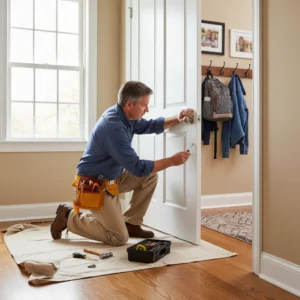
Typical handyman tasks include adjusting interior doors, trim, and small repairs.
Interior handyman jobs
- Fixing interior doors that stick, don’t latch, or have loose hinges
- Repairing or replacing baseboards, casings, and trim
- Patching drywall holes and cracks, then spot-painting to blend
- Installing or replacing shelving, window coverings, cabinet and door hardware, and mounting TVs, mirrors, and artwork
Exterior handyman jobs
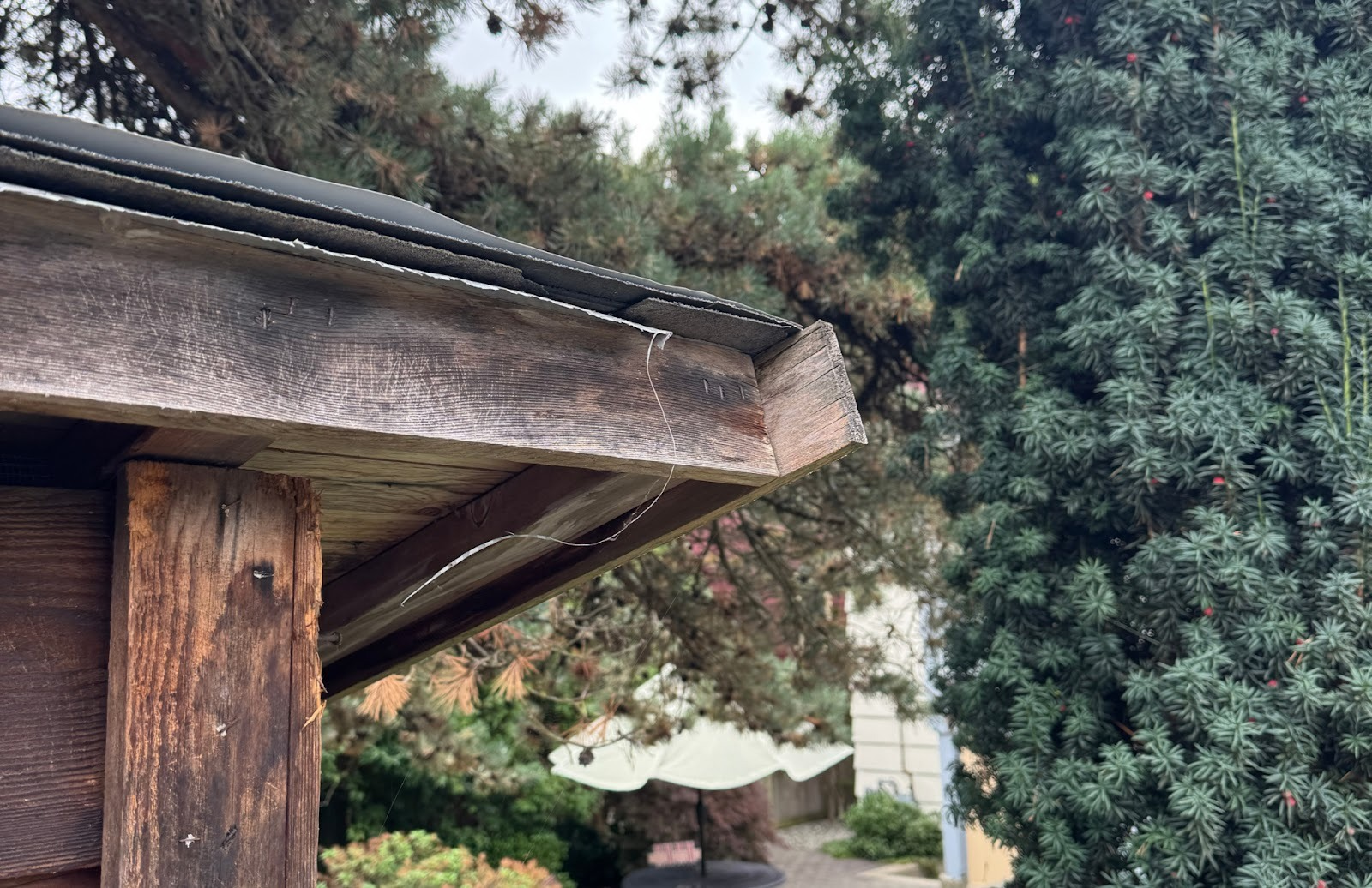
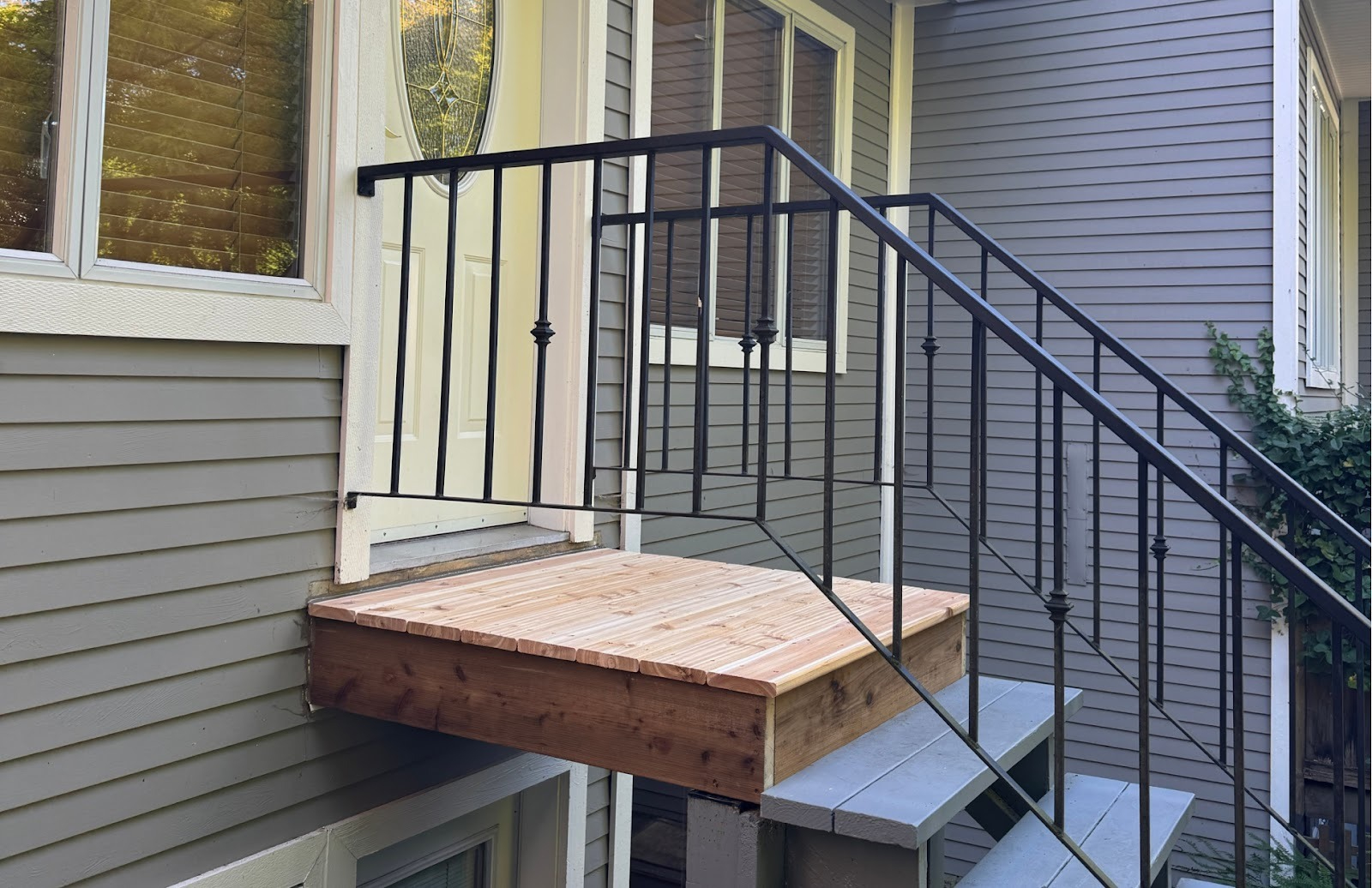
- Repairing or tightening small sections of exterior trim, railings, steps, and deck boards
- Caulking around windows, doors, and penetrations to keep out water
- Minor siding, fence, gate, and weatherstripping repairs
Small carpentry & finishing work
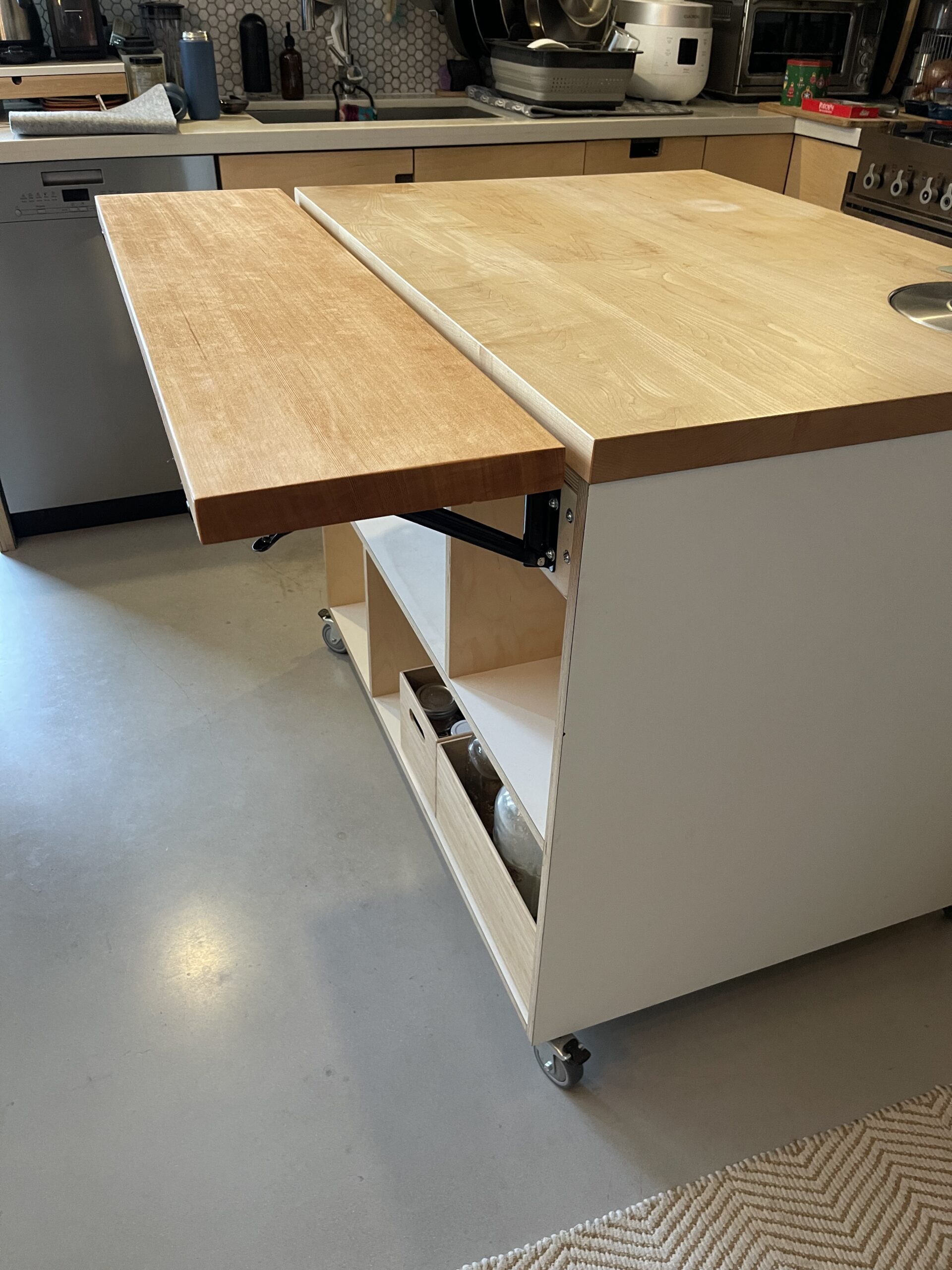
- Framing and finishing small non-structural partitions, feature walls, or wainscoting
- Accessibility-focused tweaks like grab bars, extra handrails, and safer thresholds
Many of these tasks are exactly the sort of thing busy homeowners in condos, townhomes, and single-family houses phone in to Microworks across Metro Vancouver.
What belongs on your handyman list (with examples)
A handy rule of thumb: if it’s bugging you daily and you’d expect it done in under a day, it probably belongs on your handyman list.
Quick wins you’ve been putting off
As you walk to your home, look for things like:
- Doors that scrape, slam, or don’t lock smoothly
- Baseboards chewed up by vacuums or pets
- Loose towel bars, hooks, and wobbly shelves
- Damaged drywall behind doors or in high-traffic hallways
- Caulking missing around tubs, showers, sinks, or exterior penetrations
- Small areas of exterior wood rot that haven’t spread yet
Bundling tasks for one efficient visit
The magic of a good handyman service is that they can tackle many small jobs in one trip. That’s where you get real value. Instead of booking five different trades for fifteen-minute tasks, one trained technician can move from item to item while they’re already set up in your space.
Microworks is designed around this model: you share your list ahead of time, our team blocks enough time, and your technician arrives in a fully stocked van ready to chip away at that list in an organized way.
What still needs a specialist or permit in BC
Technical Safety BC makes it clear that most electrical and gas work is regulated. In many cases, the work must be done under permit by licensed contractors, or by qualifying homeowners under strict conditions and inspection.
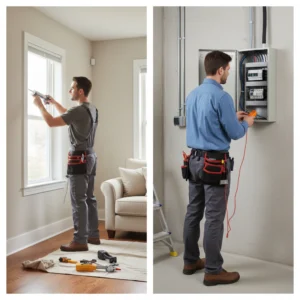
Some tasks suit a handyman, while regulated electrical and gas work require licensed specialists.
Electrical and gas work
Technical Safety BC makes it clear that most electrical and gas work is regulated. In many cases, the work must be done under permit by licensed contractors, or by qualifying homeowners under strict conditions and inspection.
- Specialist territory: New circuits, panel changes, EV charger installs, heat pumps, in-floor heating, major lighting layout changes, gas appliance installs, or relocations.
- Handyman adjacent: Project support work that does not involve regulated connections, like access panels, drywall repairs after permitted work, trim and caulking, rot repair, railings, stairs, landings, and other carpentry and finishing tasks.
Structural changes and larger renovations
In the City of Vancouver and surrounding municipalities, anything that changes structure, fire separation, or use of space can trigger a building permit. Moving load-bearing walls, adding new windows, or doing a full kitchen overhaul generally calls for a renovation contractor, not a handyman.
- Specialist territory: additions, full basement finishes, moving or adding structural beams, major layout changes, full kitchen or bathroom gut-and-rebuild.
- Handyman territory inside those projects: punch-list items, trim and finishing touches, and small corrections after the main renovation is complete.
Strata and condo considerations
In condos and townhomes, strata bylaws can limit what you’re allowed to change, especially around plumbing stacks, exterior appearance, and penetrations through walls or floors. Many buildings also require proof of liability insurance from anyone working on site.
A professional handyman service should be comfortable working within those rules, and able to provide insurance documents and WorkSafeBC coverage when requested.
Handyman vs. specialist: quick comparison
| Good for a Handyman | Call a Specialist |
| Repairing rotted exterior trim on a small section | Replacing or redesigning an entire deck or balcony |
| Patching a few drywall holes and repainting | Reconfiguring multiple rooms or adding new walls |
| Rebuilding stairs, replacing landings, and rebuilding railings and guards | Structural redesigns or projects that need engineered drawings, major permits, or inspections |
| Installing grab bars or additional railings | Major accessibility renovations needing design and permits |
Can a handyman do electrical work or plumbing in BC?
Short answer: only within tight limits, and they should be upfront about those limits.
BC’s Safety Standards Act and related regulations say that regulated electrical and gas work must be done by qualified people under permit, or by homeowners who meet specific criteria and follow permit and inspection rules. BC Safety Standards Act regulations spell out the details. That’s for your safety and for insurance reasons.
A responsible handyman company will:
- Tell you when a job needs a licensed electrician, plumber, or gas fitter
- Work alongside those trades by handling carpentry and finishing details
- Stick to non-regulated tasks, and avoid any under the radar re-wiring or gas work
When in doubt, check with Technical Safety BC’s homeowner resources or your municipality’s building department before altering electrical, gas, or major plumbing.
How Microworks Handyman handles “micro” projects on the North Shore
Microworks Handyman is built for small projects. Based in North Vancouver, our team focuses on the kind of work big contractors usually pass on: doors that don’t behave, rot repairs, drywall patches, trim fixes, and the finishing touches that make a home feel cared for.
Small-project-only by design
Because we’re not chasing big renovations, we can schedule and price work for short visits. Technicians arrive uniformed, in branded vans, follow standardized processes, and back their work with a one-year workmanship warranty, clear fixed-price estimates, reminders, and digital documentation.
You can see the Microworks services we offer across North Vancouver, West Vancouver, Vancouver, Burnaby, Coquitlam, Bowen Island, and nearby communities.
What a typical Microworks visit looks like
- You send your list. We review photos, notes, and priorities so we know what tools and materials to bring.
- We confirm scope and estimate. If something looks like a specialist’s job, we’ll say so before booking.
- Visit day & wrap-up. Your technician walks through the list with you, protects your space, works systematically through each item, then reviews what’s done and leaves things tidy.
The goal is simple: turn your scattered “someday” tasks into a clear, finished checklist.
How to create (and clear) your own handyman list
Not sure where to start? Here’s a simple three-step way Metro Vancouver homeowners can build a practical handyman list.
Step 1: Walk your home with a notepad (or your phone)
Walk slowly through every room, plus your exterior, and write down anything that looks worn, loose, broken, or missing. Don’t filter yet; just capture it. A seasonal home maintenance checklist from organizations like CMHC or this sample seasonal home maintenance checklist can jog your memory if you’re stuck.

Walking your home with a notepad is a simple way to build a practical handyman list.
Step 2: Sort into “handyman”, “specialist”, and “DIY”
Next to each item, mark:
- H – feels like a small repair or install (handyman)
- S – likely needs permits, design work, or licensed trades (specialist)
- D – you’re genuinely happy to do this yourself
Your H-list becomes the scope you send to your handyman. Your S-list is for future planning with electricians, plumbers, or renovation contractors.
Step 3: Book a visit and keep a running list
Once you’ve cleared a chunk of tasks with a service like Microworks, keep a small notepad or phone note titled “Handyman List.” As new annoyances show up, drop them in there. When it’s long enough, request an estimate online and clear the list in one go.
FAQ: What do handyman do for Metro Vancouver homeowners?
What do handyman do day to day?
Day to day, handymen handle small repairs, adjustments, and installs. In Metro Vancouver that usually means fixing sticky doors, patching drywall, repairing trim and caulking, and taking care of the “little things” that never quite make it to the top of your weekend list.
What a handyman does vs. a general contractor?
A handyman is your go-to for short, contained tasks. A general contractor coordinates multiple trades for large projects such as full kitchen or bathroom renovations, additions, and major layout changes. If a project needs design work, permits, and weeks of labour, it’s contractor territory; quick punch lists and minor fixes belong with a handyman.
How much work can a handyman do in one day?
It depends on the mix of tasks and how much prep is needed, but a well‑organized visit can often cover several doors, a few drywall patches, some hardware installs, and basic caulking or trim repairs. Sharing photos and details ahead of time helps your handyman plan materials and sequence so the day runs smoothly.
Ready to clear your handyman list?
If your Metro Vancouver home has a growing list of “I’ll get to it one day” repairs, you don’t have to keep stepping around them. Microworks Handyman exists specifically for those small projects that larger contractors skip.
Share your list, get a clear fixed-price estimate, and let a Red Seal–led team handle the details while you keep your evenings and weekends. Use the Get an Estimate form to start your list today.
Homeowners who book Microworks for recurring small-project visits often tell us it’s a relief to clear a long list of minor repairs in a single, organized appointment instead of juggling multiple contractors.