You’re looking around an older North Vancouver home and noticing loose rugs, dim hallways, and a tub that’s tricky to step into. Maybe there’s already been a “near miss” on the stairs. A fall can change an older adult’s life in seconds, but many fixes are small, targeted upgrades, not major renovations.
This practical home safety checklist for seniors focuses on 18 simple changes a skilled handyman can handle in a single afternoon, so seniors can stay independent at home longer.

Contents
- TL;DR:
- Why home fall prevention matters so much for seniors
- 18 simple safety upgrades a Metro Vancouver handyman can do in one afternoon
- Room by room elderly home safety checklist (print friendly)
- How to prioritize upgrades when everything feels urgent
- DIY vs. hiring a Metro Vancouver handyman
- What a Microworks Handyman safety visit looks like
- FAQs
TL;DR:
If you only have a few minutes, start with these quick wins that a Metro Vancouver handyman can usually tackle in one visit:
- Add secure grab bar installation in the shower and beside the toilet.
- Add non-slip strips or mats in the tub, shower and on key steps.
- Brighten dark areas with LED bulbs and motion sensor night lights.
- Fix or add sturdy handrails on all stairs, inside and out, with professional carpentry services.
- Secure or remove loose rugs and tidy cords from walking paths.
- Raise toilet height and install a handheld shower for easier transfers.
- Check and update smoke and carbon monoxide alarms.
Want someone else to handle the punch list? Microworks Handyman focuses on small projects across North and West Vancouver, Burnaby, Vancouver and nearby areas and can bundle many of these into one organized visit.
Why home fall prevention matters so much for seniors
Across Canada, public health data shows that roughly 20 to 30% of adults aged 65+ experience at least one fall each year, and falls remain the leading cause of injury‑related hospital stays for seniors (Public Health Agency of Canada data). In British Columbia, injury researchers estimate that about one in three older adults will fall in a given year, and falls are a major driver of loss of independence and long‑term care admissions (BC injury research).
The sobering part: around half of serious falls happen at home (Canadian home fall statistics). That’s the familiar hallway, bathroom or front steps your loved one uses every day.
“Most hazards that trip up older adults are small things: poor lighting, loose mats, awkward stairs. The good news is, small upgrades can make a big difference.”
This article focuses on the house, not health. For medical advice, fall risk assessments or exercise plans, talk with a doctor or physiotherapist and check resources like the HealthLink BC fall‑prevention pages and Home Safety Checklist (HealthLink BC home safety checklist).
18 simple safety upgrades a Metro Vancouver handyman can do in one afternoon
Here’s a practical elderly home safety checklist built around jobs a small project handyman can usually group into a single visit, the “shortlist” you can hand to your contractor.
- Install solid grab bars in tub/shower and beside the toilet
Skip suction cup bars; they often come loose. A handyman from our installation & assembly services team can locate studs, use proper anchors and mount bars at the right height so seniors have real support for stepping in, out and up.
- Add non slip surfaces in wet areas
Non‑slip strips or matting in the tub/shower and by the vanity cut down on “slippery when wet” surprises. Many Metro Vancouver bathrooms still have smooth tile; adding texture is a fast upgrade. - Upgrade stair and hallway lighting
Swapping dim bulbs for bright, warm white LEDs and adding fixtures where needed can make steps and thresholds easier to see. A handyman can also relocate fixtures or add new ones where wiring allows. - Install motion sensor night lights
Plug‑in or hard wired motion lights in the bedroom, hallway, and bathroom help with those 3 a.m. trips without fumbling for a switch. This is especially helpful for seniors who use a cane or walker. - Repair or add sturdy handrails on all stairs
Inside and outside, every set of stairs should have a solid, easy to grip rail. A handyman can tighten wobbly rails, extend them the full length of the stairs, and add a second rail where possible.
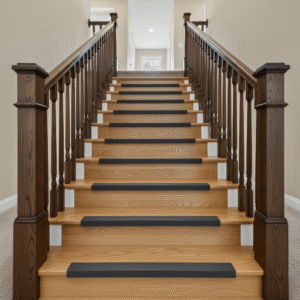
- Add high contrast, non-slip stair nosing
Thin non-slip strips or nosing on the edge of each step improve traction and contrast, especially on dark wood stairs. This makes the edge of each tread easier to judge, which reduces trips. - Secure or remove loose rugs and runners
Rugs over hardwood or tile are a classic trip hazard. A handyman can remove extras, add high quality non‑slip underlay or double‑sided tape, and reposition furniture so paths stay clear. - Tidy cords and clear walking paths
Extension cords snaking across a room are an accident waiting to happen. Cord channels, new outlets, or simple rerouting keep cables against the wall and out from underfoot. - Swap round knobs for lever handles
Lever door handles and faucet levers are far easier on arthritic hands than round knobs. A handyman can change the hardware on interior doors, main entry doors and key plumbing fixtures. - Install a handheld showerhead and shower seat
Being able to sit while showering and bring the water to you, instead of twisting and reaching, lowers fall risk. Many kits are compatible with existing plumbing and wall anchors. - Raise the toilet height
Comfort height toilets or bolts on risers reduce how far someone has to sit and stand. That means less strain on knees and hips and fewer awkward “almost falls” in a small space. - Reorganize kitchen storage for reachability
Frequently used dishes and pantry items should live between shoulder and knee height. Your handyman can adjust shelves, add pull outs, and help shift heavy items off high cupboards. - Smooth out thresholds and floor transitions
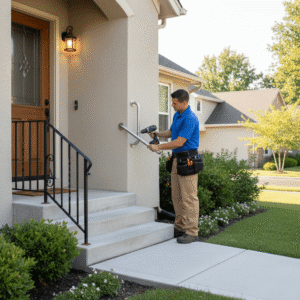
High metal thresholds and lip edges between rooms can grab a foot or walker wheel. Low‑profile, beveled transitions make rolling or stepping between flooring types smoother. - Install entry grab posts or rails at exterior steps
The front stoop is one of the most common fall locations. A properly anchored railing or grab post beside the first step gives seniors something solid to hold while juggling keys, bags, or parcels. - Update smoke alarms and carbon monoxide detectors
Older devices might be past their service life or in awkward locations. A handyman can install modern, interconnected alarms at the right height and show you how to test them safely. - Use larger, easier to see switches and labels
Rocker switches, big button dimmers, and clear labels (“Hall,” “Porch,” “Bedroom”) reduce confusion, especially at night. This is a small detail that quietly supports aging in place. - Improve bedroom safety and “path to the bathroom.”
That short walk is a hotspot for nighttime falls. Simple upgrades include a stable bedside table, reachable lamp, no loose clothing on the floor ,and a clear, well lit path to the bathroom. - Review outdoor walkways and steps
In Metro Vancouver’s wet winters, mossy concrete and uneven pavers get slick fast. A handyman can pressure wash, repair trip lips and add non‑slip coatings or grit paint to key steps.
Room by room elderly home safety checklist (print friendly)
Here’s a simple checklist you can print or work through with a parent. Check off anything that needs attention, then decide what you’ll DIY and what to hand to a handyman.
- Bathroom: Grab bars installed at the shower and toilet, non‑slip surfaces in tub/shower, a handheld shower and seat, and toiletries within easy reach.
- Stairs: Solid handrails (ideally both sides), non‑slip nosing, clear of clutter, good lighting at top and bottom.
- Floors: No loose rugs, no cords across walking paths, transitions between rooms are low and smooth.
- Lighting: Bright bulbs in halls, stairs and entries; motion night lights on route from bed to bathroom.
- Bedroom: Bed height comfortable for sitting and standing, sturdy chair for dressing, phone or call button within reach.
- Kitchen: Heavy or daily use items stored between shoulder and knee height; safe step stool (never a chair) if one is needed.
- Entry & outside: Railings at all steps, walkways even and not slippery, house number and door area well lit.
- Safety devices: Working smoke alarms and carbon monoxide detectors on every level, tested monthly.
| Area | High‑impact upgrade | Typical handyman time* |
| Bathroom | Grab bars + non‑slip strips | 1–2 hours |
| Stairs | Handrail repair + stair nosing | 1–2 hours |
| Lighting | LED swaps + motion night lights | 1 hour |
| Entry | Exterior rail or grab post | 1–2 hours |
| General | Rugs, cords, thresholds | 1–3 hours |
*Actual time depends on your home’s layout, existing hardware, and materials.
How to prioritize upgrades when everything feels urgent
When you start looking, the whole house can suddenly look risky. Here’s a simple order of operations we use on many North Shore aging‑in‑place visits:
- Target the bathroom and stairs first. They combine water, height changes, and tight spaces, so they tend to cause the most serious injuries.
- Fix the lighting and the flooring next. Better light and stable walking surfaces help in every room and benefit visitors and caregivers too.
- Then handle convenience upgrades. Kitchen storage, lever handles, and labels reduce daily strain and fatigue, which can also lower fall risk over time.
If you’re in Metro Vancouver, one practical approach is to build a small “bundle” of five to seven items from this list and have a handyman tackle them in a single afternoon visit.
DIY vs. hiring a Metro Vancouver handyman
Some checklist items are friendly for a confident DIYer; others really should be done by a pro.
- Usually DIY friendly: Plug‑in motion lights, reorganizing cupboards, removing clutter, and basic cord tidying.
- Better for a handyman: Grab bars, handrails, exterior railings, stair nosing, threshold changes, and electrical work beyond simple bulb swaps are best handled through experienced handyman repair services.
The Microworks team includes Red Seal trained carpenters with additional Adaptiv Home coursework, which focuses on accessibility and aging‑in‑place home modifications. That training, plus deep experience in local houses and condos, helps ensure safety upgrades are installed properly and look like they belong.
What a Microworks Handyman safety visit looks like
Here’s how a typical elderly home safety checklist visit might run in North Vancouver, West Vancouver, or nearby areas; for example, in a recent North Vancouver condo, we installed two bathroom grab bars, added non‑slip stair nosing, and upgraded hallway lighting in a single afternoon.
- Quick walkthrough: You or a family member walks our technician through the home, highlighting concerns and past falls or “near misses.”
- Confirm the punch list: We review your chosen upgrades, make suggestions based on building science and local conditions, then confirm a clear, fixed estimate (local fall risk context).
- Same‑day work where possible: Because we focus on small projects, most or all of the work happens that day. If we do need specialty hardware, we’ll schedule a short follow‑up.
- Clean, documented finish: At wrap‑up, we walk you through what changed, demonstrate how to use any new hardware and leave the space swept and tidy.
If you have a senior parent in Metro Vancouver and a growing list of small safety fixes, you can request an estimate online. We’re set up for quick responses, clear communication and small project work only.
FAQs
What should be included in a home safety checklist for seniors?
At minimum: secure grab bars, non‑slip surfaces in bathrooms and on stairs, strong handrails, clear and well lit walking paths, safe storage of daily use items, and working smoke and carbon monoxide alarms. Many health authorities, including the Public Health Agency of Canada, highlight these as key environmental steps to reduce fall‑related injuries.
How often should we review an elderly home safety checklist?
Plan on a full walkthrough at least once a year, plus any time health or mobility changes after surgery, a new diagnosis, or a fall. Clutter and rugs tend to creep back in over time, so a yearly reset keeps the home working for current needs.
Can this checklist help seniors who live alone?
Yes. For seniors living alone in apartments or condos, the same principles apply: safer bathrooms, good lighting, clear paths and reliable alarms. In strata buildings, you may need permission for some exterior or hallway changes, but most in suite upgrades are straightforward. A local handyman who understands condo rules can help plan what’s allowed.
Where can I learn more about fall prevention for seniors?
For health and exercise guidance, check resources from HealthLink BC and the Public Health Agency of Canada on falls among older adults (HealthLink BC fall prevention). Combine that medical advice with the home modifications in this article for a well‑rounded fall‑prevention plan.