If you’re buying or already own a home in Metro Vancouver, you’ll quickly bump into the phrase “maintenance fee” and wonder what number to plug into your budget.
Neighbours toss out rules of thumb, listings show strata charges all over the map, and online calculators are based on cheaper markets. No surprise many North Shore and Vancouver homeowners feel like they’re guessing. This guide shows what people here actually pay in 2026, what’s baked into condo and townhome fees, how the average maintenance cost for a house works out, and a simple way to turn it all into a monthly number you can live with.
TL;DR
If you only have a minute, start here.
- Condos & townhomes (strata properties): Most Metro Vancouver condos pay roughly $0.35–$0.60 per sq ft per month in strata/condo fees, with many guides citing $0.30–$0.50 as a “normal” range in BC.
- Example condo: 700 sq ft condo in Vancouver: expect about $245–$420/month in strata fees, plus $50–$150/month for in‑suite upkeep and small repairs over time.
- Townhomes: Often lower per square foot than condos around $0.15–$0.30 per sq ft, so a 1,400 sq ft townhome might run $210–$420/month in strata charges.
- Detached houses: Canadian housing groups and financial writers commonly suggest setting aside about 1% of your home’s value per year for maintenance and repairs.
- Example house: The City of Vancouver’s 2025 budget pegs the median single‑family home at roughly $2.2M. One percent of that is about $22,000/year, or roughly $1,800/month saved for ongoing and long term upkeep.
- Handyman visits: In 2026, Vancouver‑area handymen and Red Seal carpenters often charge in the $90–$140/hour range, usually with a minimum visit charge.
Think of these numbers less as a bill you’ll pay every month and more as your Vancouver Home Maintenance Envelope a steady monthly amount you set aside so the money is ready when repairs show up.
What “maintenance fee” really means in Vancouver
In Greater Vancouver people use “maintenance” to talk about three slightly different things:
- Strata / condo fees – mandatory monthly payments for condos and townhomes that cover shared building expenses.
- Ongoing upkeep for a house – money you set aside (and sometimes spend) for gutters, caulking, paint, small carpentry fixes, etc.
- Maintenance service charges – what you pay pros like handymen, plumbers, or electricians when they come to do work.
If you own a strata unit, your maintenance fee shows up right on your mortgage calculator. With a detached house the costs are still there; they’re just hidden in irregular repairs and upgrades, which is why many owners underestimate them.
As a North Vancouver based handyman company focused on small to mid sized projects, we see both sides: shiny condo lobbies with tired suites, and older houses where one ignored gutter leak quietly turned into rotten framing.
Monthly maintenance fees for condos and townhomes
Typical strata fee ranges in 2026
Recent BC guides show average strata fees in the province falling roughly in this range:
- Condos: about $0.30–$0.75 per sq ft per month across BC, with Metro Vancouver buildings often around $0.45/sq ft.
- Fraser Valley examples: 1 and 2 bedroom condos commonly sit around $0.30–$0.50/sq ft, while amenity‑heavy or older buildings can reach $0.60+/sq ft.
- Townhomes: often closer to $0.15–$0.25/sq ft, since there’s less elevator, concierge, and high rise infrastructure.
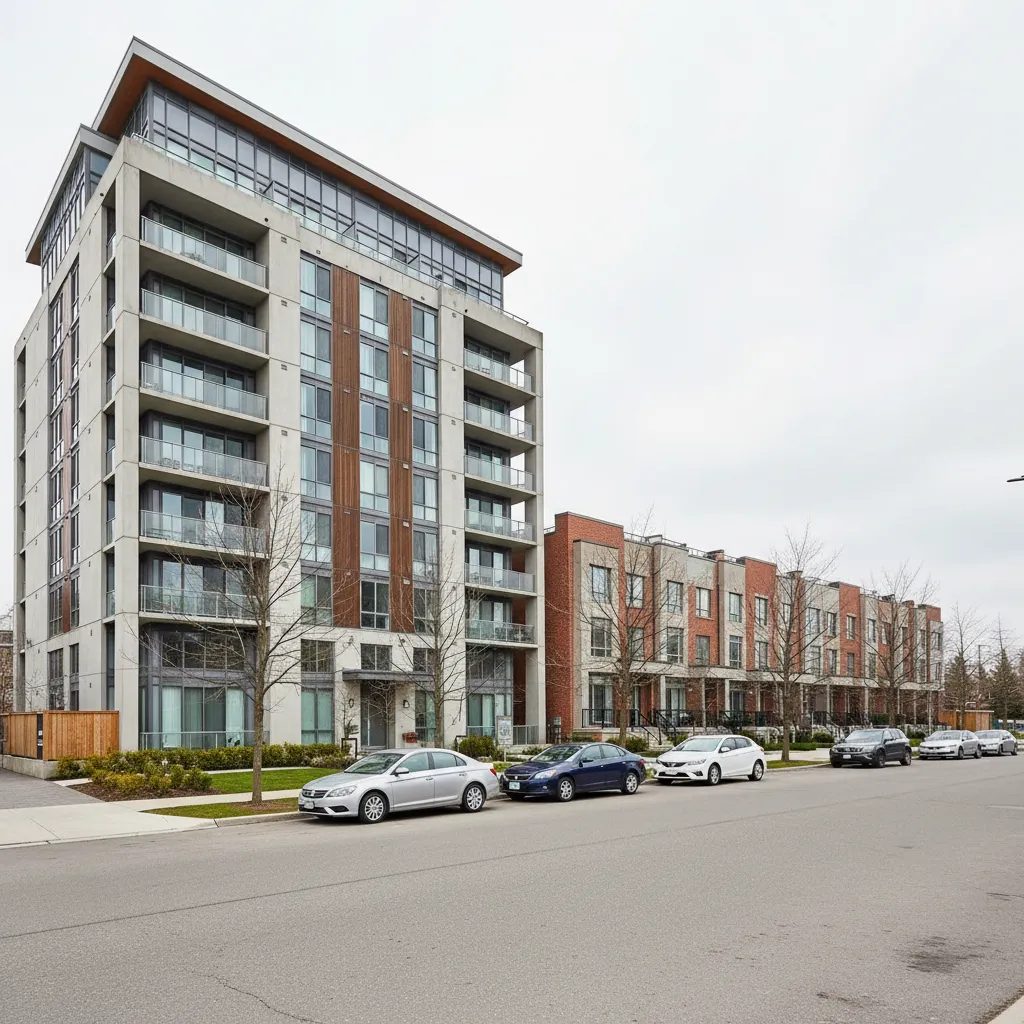
Strata fees bundle the shared costs of running and maintaining condo and townhome buildings.
Example monthly costs by unit size
Here’s how that shakes out for common Vancouver‑area homes:
- 600 sq ft condo: $0.35–$0.60/sq ft → $210–$360/month
- 800 sq ft condo: $0.35–$0.60/sq ft → $280–$480/month
- 1,000 sq ft condo: $0.35–$0.60/sq ft → $350–$600/month
- 1,400 sq ft townhome: $0.18–$0.30/sq ft → $250–$420/month
Those ranges match what we see on jobs around North Vancouver, Burnaby, and Vancouver proper when clients share their strata documents.
What condo fees usually include
Most strata fees in BC cover some mix of:
- Building insurance on the structure and common areas
- Common area cleaning, landscaping, and snow removal
- Shared utilities (water, sewer, sometimes gas and hot water)
- Property management and caretaker costs
- Regular contracts (elevator, fire systems, mechanical equipment)
- Contributions to the contingency reserve fund for future big repairs
They typically do not cover repairs inside your suite (drywall patches, trim fixes, interior doors, caulking in your shower, etc.). That’s where a homeowner level maintenance budget and a reliable local handyman come in.
If you want a deeper breakdown of what those condo charges cover, this detailed BC strata‑fee guide is a good reference.
For more on what tends to wear out inside individual units, see our Vancouver home maintenance checklist.
Average maintenance cost for a house in Vancouver
Simple formulas: the “1% rule” and square foot approach
Because there’s no single line item for a house, most experts lean on rules of thumb instead of exact amounts. Across Canada, financial writers and housing organizations often suggest:
- The 1% rule: save about 1% of your home’s value per year for maintenance and repairs.
- Age adjustments: newer homes may be closer to 0.5–1% per year, while older or neglected homes can push toward 2% or more in heavier repair years.
In Vancouver, where the City’s 2025 budget lists the median single family home around $2.2M, that 1% target is roughly $22,000/year. You won’t spend that every year, but it’s a realistic long term savings goal.
On the ground, many North Shore clients who stay on top of upkeep end up around $1–$2 per sq ft per year in actual small to mid sized repairs with big jumps in years when roofs, decks, or windows need work.

Planning ahead with a yearly maintenance budget helps keep larger house projects manageable.
Real world monthly numbers for a detached home
Putting that into a monthly plan for a typical Vancouver house:
- Home value: $2,200,000 (roughly the citywide median single family figure)
- Annual maintenance savings target (1% rule): $22,000
- Monthly amount to set aside: about $1,800/month in your Vancouver Home Maintenance Envelope
In reality, you might only spend a few thousand dollars in a quiet year, then $10,000–$20,000 when several projects line up. The envelope simply smooths those spikes.
If $1,800 feels too steep, starting where you can put even $300–$500/month into a dedicated “house account” is far better than no cushion at all in a coastal climate.
One North Vancouver family in an early 1980s house, for example, began saving about $1,200/month this way. Over three years they funded exterior caulking, railing repairs, and a batch of interior fixes without needing credit, averaging just under 1% of their home’s value per year.
To see how that fund gets used over time, compare our condo maintenance checklist with this home repair guide.
Typical maintenance service charges (2026)
On top of your savings envelope, you’ll pay trades and handyman bills as work comes up. Here’s what that looks like locally in 2026.
Handyman visits
Price guides and Vancouver renovation cost breakdowns show:
- General handyman / carpentry: roughly $90–$140/hour, often with a 2–3 hour minimum or a flat first‑hour maintenance service charge.
- Small install jobs (mounting doors, replacing trim, minor drywall repairs, swapping hardware) usually end up in the $250–$750+ range per visit, depending on how many tasks are bundled.
Microworks focuses specifically on these “micro” tasks: sticky doors, rot repair, trim, drywall patches, and similar so we’re able to plan efficient visits that clear a to-do list in one go instead of stringing out multiple small appointments.
Specialist trades
For some jobs you’ll still need a licensed specialist:
- Electricians (journeyman): often $120–$160/hour in Vancouver.
- Plumbers: similar, frequently $130–$170/hour.
- Roofers / envelope contractors: usually quoted by the job, but even small leak repairs can start in the high hundreds once access and safety gear are factored in.
When we visit a home and spot something that needs a licensed pro, we flag it, document it, and help you understand which items are safe for a handyman and which belong with a trade contractor.
What makes your maintenance costs higher or lower
Two houses on the same street can have very different yearly upkeep, even if they look alike from the curb. The biggest drivers we see around Metro Vancouver are:
- Age and past care: A 1970s house with years of deferred work will chew through your budget faster than a newer build kept in good shape.
- Exposure: Homes hammered by rain and wind (think open waterfront or ridge lines) need more frequent paint, caulking, and exterior repairs.
- Building envelope details: Complex rooflines, skylights, decks over living space, and big glass walls look great but add more failure points.
- Proactive vs reactive approach: Clients who handle small issues quickly, hairline cracks, tiny leaks, minor rot spend less over a decade than those who wait until there’s visible damage.
- DIY skills: If you’re handy and have time, you might tackle some tasks yourself and reserve your handyman budget for skilled work.
This is why two neighbours can both “budget 1%” yet one feels constantly behind while the other just books a few well timed visits a year and stays ahead of problems.
How to build a realistic monthly maintenance budget
Use this three step “Vancouver Home Maintenance Envelope” method to turn all the numbers above into one simple monthly amount.
Step 1 – Pick a base rule
- Condo / townhome:
- Use your actual strata fee, then add $50–$150/month for in‑suite repairs and small upgrades.
- Detached house:
- Start with 1% of home value ÷ 12 as your savings target.
- If that feels too high, begin at 0.5% and plan to increase it over time.
Step 2 – Adjust for your situation
Move your number up or down based on:
- Home age: newer, well built homes can sit toward the low end; older or heavily weather exposed homes need more.
- Known issues: old roofs, original windows, or aging decks are all reasons to pad the budget.
- How much you outsource: if you prefer to hire help instead of DIY, add room for labour.
Step 3 – Park it in a “house account”
Whatever monthly figure you land on $200 or $2,000 move it into a separate savings bucket labelled House Maintenance. Treat it like a fixed bill.
This is your Vancouver Home Maintenance Envelope: the fund you draw from when it’s time for a handyman visit, a new hot water tank, or a stretch of deck repair, instead of reaching for high‑interest credit.
If you’d like help turning that budget into a prioritized list of work, our prioritize home repairs guide walks through what to tackle first.
DIY vs handyman: when to bring in help
Plenty of Vancouver homeowners can change a furnace filter or tighten a cabinet hinge. The tricky part is knowing when a “quick fix” is hiding something bigger.
Based on what we see in North Vancouver, West Vancouver, and Burnaby homes, here’s a simple rule of thumb:
- Good DIY candidates: paint touch ups, basic caulking, cleaning gutters on a single storey, swapping easy access light fixtures (with the power off), tightening loose knobs.
- Better for a handyman: sticking doors and windows, rotten trim, suspicious soft spots near tubs or showers, drywall cracks that keep coming back, deck boards that flex.
- Always call a licensed pro: electrical panel work, gas lines, complex plumbing changes, anything involving structural framing or significant water ingress.
The cost of one well planned visit from a qualified handyman is usually tiny compared to a hidden leak that slowly eats away at framing, subfloor, and finishes.
Yearly small job checklist for Vancouver homes
To avoid big repair surprises, hit these key tasks every year:
- Clear gutters and downspouts before and after the heavy fall rains.
- Inspect exterior caulking around windows, doors, and siding transitions.
- Check decks, railings, and stairs for soft spots, loose fasteners, or wobbly sections.
- Test GFCI outlets and smoke/CO detectors; replace batteries as needed.
- Look for signs of moisture under sinks, around tubs, and near exterior doors.
- Touch up exposed wood and trim before it starts to gray, split, or take on water.

Regular small tasks like gutter cleaning help prevent costly water damage down the road.
Most of these can be bundled into a single half‑day or full day visit once or twice a year exactly the kind of work our team handles across the North Shore and Metro Vancouver.
For a more detailed list by season, check out our seasonal home maintenance guide.
FAQs
What is a maintenance fee in Vancouver?
In Metro Vancouver, “maintenance fee” usually means your monthly strata or condo fee for shared building expenses, along with the money you personally set aside for in‑suite or house level upkeep.
How much is a typical condo maintenance fee in Vancouver?
Most condos here pay about $0.35–$0.60 per sq ft per month in strata fees. That puts a 700 sq ft condo in the roughly $245–$420/month range, depending on age, amenities, and building condition.
How much should I budget monthly for house maintenance?
A practical starting point is to save around 1% of your home’s value per year for maintenance and repairs roughly $1,800/month on a $2.2M Vancouver house and keep that money in a separate Vancouver Home Maintenance Envelope.