If you own a home in Vancouver or on the North Shore, you’ve probably faced this question at least once: “Do I need a handyman or a contractor for this?” One loose handrail turns into a list of ten jobs, and suddenly you’re stuck in the classic contractor vs handyman decision.
In this guide, we’ll walk through exactly when a handyman makes sense, when you need a general contractor, and where a handyman vs specialized contractor choice comes into play (think electricians, plumbers, roofers). We’ll keep it local to Metro Vancouver so you can match your project to the right pro with confidence.
Contents
- TL;DR:
- What a handyman does (and doesn’t do)
- What a general contractor does
- Handyman vs specialized contractor: project‑by‑project
- Permits, safety, and legal basics in BC
- Cost expectations: contractor vs handyman
- Where Microworks Handyman fits in (and where we don’t)
- Step by step: how to choose the right pro
TL;DR:
- Handyman: Best for small repairs, minor carpentry, rot repair, drywall patches, trim, caulking, hardware swaps, minor painting, and short projects that don’t change structure.
- General contractor: Best for full renovations, additions, moving walls, new kitchens/bathrooms, or projects needing multiple subcontractors over weeks or months.
- Specialized contractor: Best for work that legally or practically needs a licensed trade (electrical panels, complex plumbing, roofing, gas, major HVAC).
For most “nagging list” items in a Vancouver house or condo, a skilled handyman service is the faster, more cost-effective choice.
At Microworks Handyman, we’re built specifically for those small to mid sized projects. If your list looks more like “tighten this, fix that, patch here, paint there” than “gut the kitchen,” you’re probably in handyman territory.
What a handyman does (and doesn’t do)
A handyman is your go to for a wide mix of small jobs around the home. In our rainy Vancouver climate, that usually means keeping water out, doors closing properly, and finishes looking fresh.
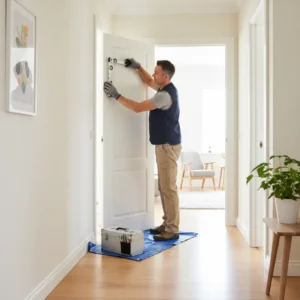
A handyman is ideal for small repair and maintenance tasks throughout the home.
Typical handyman projects in Metro Vancouver
- Fixing sticky or misaligned doors and latches
- Repairing rot in trims, thresholds, and deck boards
- Drywall patches after leaks or tenant move outs
- Caulking around tubs, showers, windows, and exterior penetrations
- Installing or repairing baseboards, casing, and other trim
- Mounting TVs, shelves, grab bars, and railings (with proper backing/fasteners)
- Minor painting and touch ups after repairs
- Small carpentry jobs like building simple steps or access panels
Companies like ours often clear an entire to-do list in one or two visits. You get one uniformed technician, a van full of tools, and a systemized approach to lots of “little” tasks.
When a handyman is the wrong choice
There are times when hiring a handyman is not the right move:
- Structural changes: Moving or adding walls, beams, or major framing.
- Large scale renovations: Full kitchen or bathroom gut jobs, full exterior reclads, full basement suites.
- Major electrical or plumbing redesigns: New circuits, panel upgrades, re‑piping, gas lines.
- Projects needing several trades on site for weeks: For example, a top to bottom main floor remodel.
In those cases, you’re in contractor territory and need someone coordinating the whole job from permits to trades to inspections.
What a general contractor does
A general contractor (often just called a “contractor”) is essentially the project manager and organizer for bigger jobs. They handle scope, schedule, and trades so you don’t have to run a construction site from your kitchen table.
Typical contractor projects
- Full kitchen and bathroom renovations
- Home additions and significant structural changes
- Whole house remodels and layout changes
- Major exterior recladding or window replacement programs
- New suites or significant basement conversions

General contractors coordinate larger renovation sites with multiple trades and a defined schedule.
A contractor will usually:
- Help plan and estimate the full renovation
- Pull or coordinate permits with your municipality
- Hire and manage sub trades (electricians, plumbers, roofers, etc.)
- Schedule inspections and coordinate materials
- Oversee the project to completion
When a contractor won’t take your job
Here’s where many homeowners get stuck. A lot of general contractors in Vancouver have minimum project sizes. They may not be interested in:
- “Just fixing a few things” between larger projects
- One off small repairs after a leak is fixed
- Touch ups before listing a home for sale
That gap is exactly why specialized small job companies like Microworks Handyman exist: to give those smaller jobs the same professionalism and planning without needing a full renovation contract.
Handyman vs specialized contractor: project‑by‑project
Beyond the basic handyman vs contractor choice, you’ll sometimes be deciding between a handyman and a specialized contractor like an electrician or plumber. Here’s a simple project matrix:
| Project type | Best fit | Why |
| Rotten exterior trim, deck stair repair | Handyman | Small carpentry and finish work; no major structural change. |
| Replace a faucet or toilet (like‑for‑like) | Handyman or plumber | Handyman for straightforward swaps; plumber if there are supply/drain issues. |
| New bathroom layout with relocated plumbing | Contractor + plumber | New layout, rough‑ins, and inspection typically need both. |
| Swap a light fixture where wiring is sound | Handyman or electrician | Handyman for basic swaps; electrician for wiring questions or upgrades. |
| New electrical circuit, panel upgrade, EV charger | Licensed electrician | Specialized work, permits, and code requirements. |
| Roof leak tracing and full roof replacement | Roofing contractor | Warranty, safety, and long‑term weather protection. |
| Multi‑room “punch list” before selling | Handyman | Lots of small fixes done efficiently in one or two focused visits. |
When in doubt, ask yourself: “Is this mostly finishing and small repair work, or am I changing how the house is built or serviced?” If it’s structure, wiring, plumbing design, gas, or roofing systems, you’re usually better off with a specialized contractor and, for bigger scopes, a general contractor leading the project.
Permits, safety, and legal basics in BC
No matter who you hire, safety and compliance matter. A few key points for Vancouver and BC homeowners:
- Permits: Many structural changes, new suites, and major electrical or plumbing changes require building or trade permits from your municipality. Check the City of Vancouver permits and licences page or your local city hall for details.
- Insurance & WorkSafeBC: Whoever you hire should carry liability insurance and be in good standing with WorkSafeBC, so you’re protected if someone is hurt on your property.
- Licensed trades: Electrical, gas, and some plumbing work must be done by licensed contractors with proper permits. A good handyman will tell you when something needs a specialist.
- Strata rules: In condos and townhomes, your strata may have restrictions on noisy work, hours, and what can be changed. Always check before booking bigger jobs.
This article is for general information only and isn’t legal or code advice. When you’re unsure, talk with your municipality or a licensed contractor about permit and inspection requirements.
Cost expectations: contractor vs handyman
Every company prices differently, but the way a handyman and a contractor approach pricing is usually quite different.
How handyman pricing usually works
- Ideal for shorter projects (often 1–2 days or less)
- Often billed as fixed price per task or half day/day blocks
- Great when you have a punch list of small items across your home
At Microworks, for example, we typically provide clear fixed estimates instead of vague “time and materials” guesses, and focus strictly on the sort of small projects that fit a handyman model well.
How contractor pricing usually works
- Ideal for multi week or multi month projects
- Detailed quotes or contracts based on full scope, materials, and trades
- Includes project management, scheduling, and oversight
Because of overhead and coordination, a contractor will often have a higher minimum project size. Paying that premium for ten small repairs spread around the house usually doesn’t make sense; that’s where a handyman shines.
For tips on budgeting and consumer rights when hiring bigger renovation contractors in BC, you can also review resources from Consumer Protection BC.
Where Microworks Handyman fits in (and where we don’t)
Microworks Handyman is a small project only company based in North Vancouver. That’s not marketing spin; it’s literally how we’re built. Our sweet spot:
- Clearing repair lists in houses, townhomes, and condos
- Rot repair and small exterior fixes before bigger damage sets in
- Accessibility and aging in place improvements (grab bars, safer steps, railings)
- Move in/move out touch ups for homeowners and small landlords
- Light carpentry and finishing work, inside and out
Every project is led by a team that includes Red Seal trained carpenters and experienced technicians who work on Vancouver area homes daily. We use modern tools for scheduling, estimates, and communication so your small projects are handled with big project professionalism.
When we’ll recommend a contractor instead
We routinely tell clients to hire a contractor or specialized trade when:
- The project involves moving or adding structural walls
- You’re planning a full kitchen or bathroom gut
- There’s significant electrical, plumbing, or gas redesign involved
- The scope clearly needs several trades on site for weeks
In those situations, we’re happy to help with the smaller finishing work before or after the big renovation, but we won’t try to be your general contractor. That line is part of how we protect both your home and our reputation.
If you’re in North Vancouver, West Vancouver, Vancouver, Burnaby, Coquitlam, or nearby and your project sounds like our kind of work, you can browse our handyman services or check that you’re in our service area.
Step by step: how to choose the right pro
1. Write down what you actually need done
Instead of “fix up the house,” list specific tasks: “patch drywall in hallway,” “adjust front door,” “replace two deck boards.” A clear list makes it obvious whether you have ten tiny jobs or one large remodel.
2. Match your list to the right category
- Mostly small, unrelated repairs or installs? Start with a handyman.
- One big space changing significantly? Think contractor.
- Primarily electrical, plumbing, gas, or roofing? Look at specialized trades.

Writing out your project list and comparing options makes it easier to choose between a handyman and a contractor.
3. Check insurance, WorkSafeBC, and references
No matter who you pick, ask for proof of insurance and WorkSafeBC standing, and look for recent local reviews. A quick phone call or email should make you feel heard and understood, not rushed.
4. Get a clear written estimate
Whether it’s a small or large job, you should know:
- What’s included and excluded
- Rough timelines
- How changes will be handled
- Payment schedule
5. Trust your gut about fit
If you feel pressured, confused, or brushed off, that’s a sign to keep looking. The right handyman or contractor will be clear, respectful, and realistic about what they can and can’t do.